Affordable Home Fitness Essentials That Work
Share
A good home setup should fit your budget, your space, and your routine. That is why affordable home fitness essentials matter. The right few tools can cover strength, cardio, core work, mobility, and recovery without turning your living room into a full gym.
Why affordable home fitness essentials make sense
Most people do not need ten machines. They need a few pieces that do more than one job. If you live in an apartment, train early, or share space with family, that matters even more.
The smartest setup is built around versatility. One item should support several movements. It should store easily. It should also be quiet enough for real life. That trade-off matters. Heavy gear can feel more stable, but lighter gear usually wins for storage and flexibility.
The five essentials worth buying first
1. Resistance bands set
If you are starting from scratch, bands are usually the best first buy. They work for rows, presses, squats, glute work, shoulder training, and assisted mobility. They also make sense for beginners and more advanced users because resistance can scale.
Bands are especially useful in small apartments. They are light, easy to store, and much quieter than dumbbells hitting the floor. The downside is feel. Some lifters prefer fixed weight because it is easier to track. Still, for value per dollar, bands are hard to beat.
Technical specs
- Footprint Dimensions (folded vs. unfolded): Folded roughly 8 x 6 x 2 inches in a storage pouch; unfolded band length typically 48-82 inches depending on style
- Weight Capacity: User load varies by anchor point; effective resistance range often 10-150 pounds combined
- Resistance Type / Motor Horsepower: Elastic resistance from latex or fabric-coated bands; no motor
- Noise Level Assessment (Crucial for apartments/upstairs): Very quiet; one of the best options for upstairs training
2. Ab roller
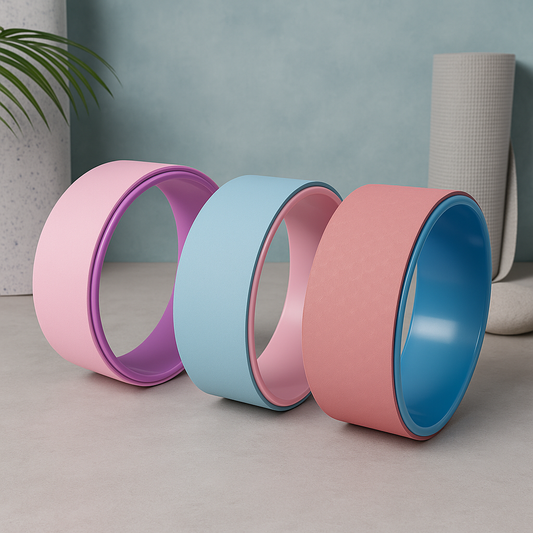
An ab roller looks simple because it is simple. That is the point. It trains the core through anti-extension, but it also challenges shoulders, lats, and bracing. For a low-cost tool, it delivers more than many bigger products.
It does have a learning curve. Beginners may need shorter rollouts or knee-supported reps on a mat. If wrist comfort is a concern, handle shape matters. A wider wheel usually feels more stable, while a narrow wheel increases balance demand.
Technical specs
- Footprint Dimensions (folded vs. unfolded): Some models disassemble to about 7 x 7 x 3 inches; assembled size often 12-16 inches wide and 7-8 inches tall
- Weight Capacity: Commonly 220-330 pounds depending on axle design
- Resistance Type / Motor Horsepower: Bodyweight rolling resistance; no motor
- Noise Level Assessment (Crucial for apartments/upstairs): Low noise on mats; moderate on hardwood if the wheel is hard plastic
3. Doorway pull-up bar
A pull-up bar adds serious training range without using floor space. You can train pull-ups, chin-ups, dead hangs, knee raises, and band-assisted variations. It is one of the best buys for upper-body strength if your doorway and wall setup allow it.
This is where real-life constraints matter. Not every doorway is a fit. Some bars need trim depth or width within a narrow range. Low ceilings are less of an issue than with jump work, but door frame compatibility is everything. Stability also depends on proper setup. Cheap bars that shift under load are not worth the savings.
Technical specs
- Footprint Dimensions (folded vs. unfolded): Compact storage around 38 x 8 x 3 inches; installed size usually 36-40 inches wide with 8-12 inch wall projection
- Weight Capacity: Often 220-300 pounds when correctly installed or mounted
- Resistance Type / Motor Horsepower: Bodyweight resistance; no motor
- Noise Level Assessment (Crucial for apartments/upstairs): Low to moderate; quiet during controlled reps, but frame contact can create noise if movement is sloppy
Affordable home fitness essentials for cardio
4. Adjustable jump rope
If you want cardio without buying a machine, a jump rope is the obvious pick. It is cheap, portable, and brutally effective. You can build conditioning fast with short sessions. It also stores in a drawer.
But it is not perfect for every home. If you live upstairs, impact noise may annoy neighbors. Low ceilings can also kill the workout before it starts. In those cases, a rope-free simulated jump pattern or low-impact band circuit may be the better fit.
Technical specs
- Footprint Dimensions (folded vs. unfolded): Folded roughly 6 x 6 x 2 inches; unfolded rope length usually adjustable up to 9-10 feet
- Weight Capacity: No fixed user capacity; suitable for most users based on rope length and handle durability
- Resistance Type / Motor Horsepower: Manual rotational resistance; no motor
- Noise Level Assessment (Crucial for apartments/upstairs): Moderate to high depending on flooring and landing style; use a mat to reduce sound
Do not skip recovery and mobility
5. Massage ball and mobility kit
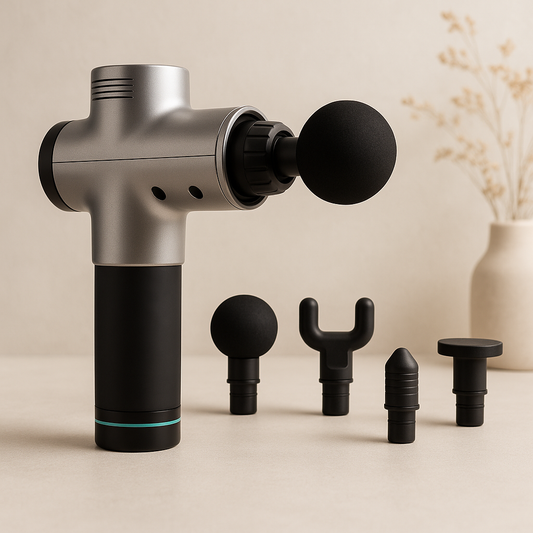
Training gear gets attention. Recovery gear keeps you consistent. A massage ball, stretch strap, or compact mobility kit can help reduce stiffness in the feet, hips, glutes, shoulders, and upper back. That matters if you sit all day, train in short windows, or deal with post-workout tightness.
This category is affordable because it does not need to be complex. A simple massage ball can do a lot. The key is using it consistently. Five minutes after a workout often beats one long recovery session once a week.
Technical specs
- Footprint Dimensions (folded vs. unfolded): Massage ball typically 2.5-5 inches in diameter; compact mobility kit stored in about 10 x 8 x 3 inches
- Weight Capacity: User-applied pressure rather than rated load; material density should resist deformation under bodyweight
- Resistance Type / Motor Horsepower: Manual pressure and stretch tension; no motor
- Noise Level Assessment (Crucial for apartments/upstairs): Very quiet; ideal for shared spaces and late-night recovery
How to build a setup without wasting money
Start with your actual constraint, not your ideal gym fantasy. If space is tight, prioritize vertical storage and equipment that disappears into a closet. If noise is the issue, skip anything that drops, slams, or creates repetitive impact. If motivation is the challenge, choose gear with a low setup barrier.
A simple pattern works for most people. Pick one strength tool, one core tool, one cardio tool, and one recovery tool. That gives you enough range to build a real routine. It also keeps the budget under control.
You should also think about progression. Bands with multiple resistance levels beat a single fixed option. An adjustable rope beats one that cannot be sized correctly. A pull-up bar that supports hangs, raises, and band work gives you more training life than a one-trick product.
What matters more than price alone
Cheap and affordable are not the same. Cheap gear often fails at the stress points. Handles crack. Anchors slip. Foam tears early. Affordable gear should still feel dependable under repeated use.
Look closely at materials, stitching, grip texture, and connection points. That is where value shows up. For example, fabric-covered bands may feel better on the legs than bare latex in some movements, but latex often offers smoother stretch for upper-body work. It depends on how you train.
Virfit’s approach works best for buyers who want practical tools that support training and recovery without overcomplicating the setup. That balance matters when you need equipment that performs well in real homes, not just perfect demo spaces.
How to choose affordable home fitness essentials
Use this checklist before you buy:
- Match the tool to your main goal. Strength, cardio, mobility, or recovery.
- Measure your space first. Doorways, ceiling height, and floor clearance matter.
- Check noise tolerance. Apartments need quieter options and better flooring protection.
- Prioritize multi-use equipment. One tool should support several exercises.
- Look for scalable difficulty. You should not outgrow it in a month.
- Review contact points. Handles, anchors, wheels, and grips should feel secure.
- Think about storage. If it is annoying to put away, you may stop using it.
- Keep recovery in the budget. Better recovery supports better consistency.
The best home setup is the one you will actually use on busy weekdays, in tight spaces, and with real-life limits. Buy the essentials that make training easier to start and easier to repeat.