8 Best Yoga Accessories for Beginners at Home
Share
A slippery mat and sore knees can end a new yoga habit fast. The best yoga accessories beginners choose solve those problems first. Start with stable, quiet gear that improves comfort and alignment. You do not need a studio-sized collection. You need a few tools you will use every week.
Best Yoga Accessories for Beginners: Start Here
The specifications below are practical buying targets. They are not universal product ratings. Always check the manufacturer label before loading, washing, or storing any accessory.
1. A Supportive Non-Slip Yoga Mat
Your mat is the foundation. Choose a textured surface and enough cushioning for kneeling poses. A 6 mm mat suits most beginners. It protects joints without feeling unstable during standing balances.
- Footprint dimensions: 72 x 24 x 0.24 inches unfolded; about 24 x 5 inches when rolled
- Weight capacity: Not load-rated; designed as a floor surface, not a raised platform
- Resistance type / motor horsepower: None / 0 hp
- Noise level assessment: Silent during use; thicker material reduces floor contact noise in apartments
2. Two Firm Yoga Blocks
Blocks bring the floor closer. That matters when hamstrings, hips, or shoulders feel tight. Use one block under each hand in a forward fold. Use both in restorative poses or supported bridges.
Cork feels dense and grounded. Foam is lighter and often easier on the wrists. Neither is automatically better. Choose cork for stability or foam for easy carrying.
- Footprint dimensions: 9 x 6 x 4 inches per block; no folded position
- Weight capacity: Not standardized; do not use blocks as load-rated steps or benches
- Resistance type / motor horsepower: None / 0 hp
- Noise level assessment: Very quiet; foam is quieter on hard floors than cork
3. An 8-Foot Yoga Strap
A strap extends your reach without forcing a stretch. It is especially useful for seated hamstring work, shoulder mobility, and poses requiring a bind. Beginners often pull too hard when flexibility feels limited. A strap creates room to progress with control.
Look for a woven cotton or reinforced polyester strap with a secure D-ring buckle. Skip stretchy straps for traditional yoga positioning. They can encourage overpulling.
- Footprint dimensions: 96 x 1.5 inches unfolded; about 4 x 1.5 inches when rolled
- Weight capacity: Not load-rated; use only for controlled stretching assistance
- Resistance type / motor horsepower: Non-elastic woven fabric / 0 hp
- Noise level assessment: Silent; buckle contact can make a light sound on hard flooring
4. A Thick Knee Pad
Many beginners tolerate poses poorly because their knees hurt. A dedicated knee pad fixes that without requiring an overly soft mat. Place it under your knees for low lunge, tabletop, camel, and child’s pose.
This small accessory makes home practice more consistent. It also rolls up quickly for compact storage.
- Footprint dimensions: 24 x 10 x 0.6 inches unfolded; about 10 x 3 inches when rolled
- Weight capacity: Not load-rated; intended for kneeling pressure distribution
- Resistance type / motor horsepower: None / 0 hp
- Noise level assessment: Silent; helps soften knee contact on tile, laminate, and hardwood
5. A Yoga Bolster for Recovery-Focused Practice
A bolster supports the body during longer holds. Use it under your spine for a gentle chest opener. Place it under your knees during savasana. Sit on it during meditation if hip tightness makes cross-legged seating uncomfortable.
Choose a firm bolster that holds its shape. Very soft filling can flatten too quickly. Round bolsters support chest-opening positions well. Rectangular designs create a broader base for restorative work.
- Footprint dimensions: 26 x 10 x 6 inches; no folded position
- Weight capacity: Not load-rated; intended for supported resting poses
- Resistance type / motor horsepower: None / 0 hp
- Noise level assessment: Silent; no impact noise during normal use
6. A Full-Coverage Yoga Towel
Hot yoga is not the only use case. A yoga towel adds grip when your hands sweat. It also creates a cleaner surface if you share space, travel, or practice in a community gym.
Choose a towel with silicone grip dots underneath. A regular bath towel bunches under your feet. That creates a distraction during lunges and transitions.
- Footprint dimensions: 72 x 24 inches unfolded; about 12 x 9 x 1.5 inches folded
- Weight capacity: Not load-rated; surface layer only
- Resistance type / motor horsepower: None / 0 hp
- Noise level assessment: Silent; reduces minor squeaks from hands or feet on a mat
7. A Firm Yoga Blanket
A yoga blanket is one of the most versatile props in a beginner setup. Fold it under your hips during seated poses. Place it under your head in savasana. Cover up during relaxation when body temperature drops.
Choose a dense cotton or recycled-fiber blanket that folds cleanly. A thin throw blanket may feel cozy but offers less support.
- Footprint dimensions: 60 x 80 inches unfolded; about 20 x 15 x 4 inches when folded
- Weight capacity: Not load-rated; use as padding, warmth, or positional support
- Resistance type / motor horsepower: None / 0 hp
- Noise level assessment: Silent; adds soft cushioning on hard floors
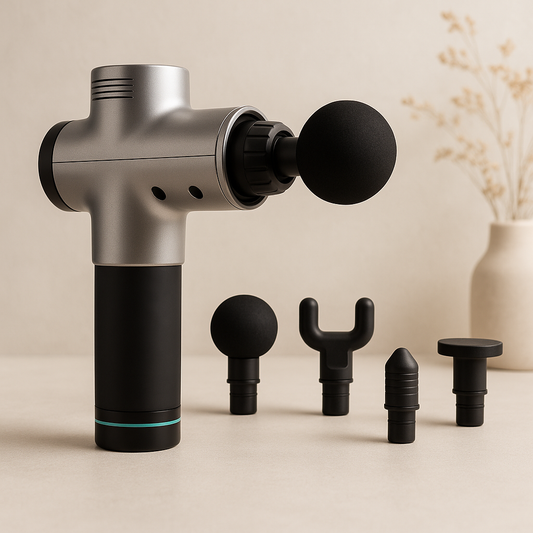
8. A Massage Ball for Post-Practice Mobility
Yoga improves mobility, but some tight spots need focused pressure. A massage ball works well on the feet, glutes, upper back, and shoulders. It is compact enough for a desk drawer or gym bag.
Start with a smooth ball. Spiked textures can feel too aggressive when you are new to self-massage. Use a wall for lighter pressure. Floor work creates more intensity.
- Footprint dimensions: 2.5-inch diameter; no folded position
- Weight capacity: Not load-rated; use against a wall or floor with controlled body pressure
- Resistance type / motor horsepower: Firm, non-motorized compression / 0 hp
- Noise level assessment: Low noise; use a mat or rug underneath on upstairs floors
Build a Setup You Will Actually Use
Beginners often buy too much before building a routine. Start with a mat, two blocks, and a strap. Add a knee pad if kneeling feels uncomfortable. Add a bolster or blanket when you want longer restorative sessions.
For an apartment, prioritize a thicker mat, quiet foam or fabric props, and a massage ball used over a rug. For travel, prioritize a towel, strap, and lightweight foam blocks. Your setup should fit your space and schedule, not someone else’s ideal studio.
How to Choose Yoga Accessories That Fit Your Practice
Use this checklist before you buy:
- Choose a 6 mm non-slip mat for joint comfort and steady balance.
- Pick two blocks, not one, for more symmetrical support.
- Select a non-elastic strap between 6 and 8 feet long.
- Add knee cushioning before buying advanced props.
- Choose washable surfaces if you sweat often or share equipment.
- Check stored dimensions before buying bulky bolsters or blankets.
- Avoid treating any prop as a load-rated bench or step.
- Start with equipment that removes friction from practice.