Do Massage Guns Help Recovery? Yes, But
Share
If your legs feel heavy after training, recovery tools matter. So, do massage guns help recovery? Usually, yes. They can reduce short-term soreness, improve how loose you feel, and make it easier to move the next day. But they are not magic. The real benefit depends on when you use them, how you use them, and whether the device fits your space, noise tolerance, and training habits.
Do massage guns help recovery or just feel good?
Both. That is the honest answer.
Massage guns can help with perceived recovery. That means they often make you feel less stiff, less sore, and more ready to train again. For many people, that matters. If you feel better, you are more likely to stay consistent.
The bigger question is what they do not do. They do not speed muscle repair in a dramatic way. They do not replace sleep, hydration, food, or smart programming. If you trained too hard for your current level, a massage gun will not erase that mistake.
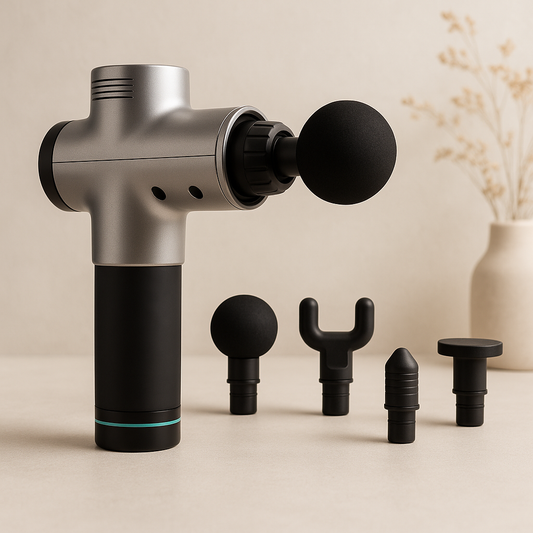
What percussion tools do well is simple. They create repeated pressure and vibration into soft tissue. That input can increase local blood flow, reduce the sensation of tightness, and improve short-term range of motion. For warmups and post-workout relief, that is useful.
Where massage guns actually help most
Massage guns tend to shine in three situations.
First, they help before training. A short session on calves, quads, glutes, or upper back can make movement feel smoother. If you sit a lot, this matters. You may not suddenly become more mobile, but you can feel less restricted when you start.
Second, they help after training when soreness is mild to moderate. They are especially useful after leg days, runs, circuits, or higher-volume sessions. A few minutes per muscle group can reduce that stiff, flat feeling that shows up later.
Third, they help on rest days. This is often overlooked. Recovery is not just about the hour after a workout. Using a massage gun the next morning or later that evening can help you keep moving instead of locking up.
What the research really suggests
The evidence is promising, not perfect.
Studies on percussive therapy and related forms of vibration suggest short-term benefits for flexibility, muscle soreness, and perceived recovery. That is the key phrase - perceived recovery. In real life, that still counts. If your hamstrings feel less tight and your squat session feels better, the tool did its job.
What research does not strongly support is a huge performance boost from the device alone. You should not expect faster strength gains just because you own one. Think of a massage gun as support equipment. Built for performance, designed for real life.
The trade-offs people ignore
More power is not always better.
A very aggressive device can feel impressive at first. But too much pressure on a sore area can leave you more irritated, not less. Beginners often press too hard, stay too long, or use the wrong attachment. Then they assume the tool does not work.
Noise matters too. If you live in an apartment, train early, or recover while your family sleeps, a loud unit gets used less. The best recovery tool is the one you actually reach for.
Battery life also matters more than most buyers think. If you need frequent charging, your routine gets interrupted. Consistency drops.
Top massage gun types to consider
Mini massage gun
Best for portability, quick sessions, and smaller muscle groups. Great if you recover between work meetings, travel often, or want something easy to store.
- Footprint Dimensions: Folded 5 x 3 x 1.8 in; Unfolded 5 x 3 x 1.8 in
- Weight Capacity: Not applicable for handheld recovery devices
- Resistance Type / Motor Horsepower: Percussive motor, 20W to 30W output
- Noise Level Assessment: Quiet to moderate, usually apartment-friendly
The trade-off is power. A mini gun works well on forearms, calves, shoulders, and feet. It may feel underpowered on glutes or quads if you train hard.
Standard massage gun
This is the best fit for most people. It balances size, power, battery life, and ease of use. If you want one device for warmups and post-workout recovery, start here.
- Footprint Dimensions: Folded 9 x 6 x 2.5 in; Unfolded 9 x 6 x 2.5 in
- Weight Capacity: Not applicable for handheld recovery devices
- Resistance Type / Motor Horsepower: Percussive motor, 40W to 60W output
- Noise Level Assessment: Moderate, acceptable for most homes but noticeable in quiet apartments
This category gives you enough force for larger muscles without becoming bulky. It is usually the smartest value pick.
Deep tissue massage gun
Best for heavier athletes, dense muscle tissue, and people who prefer stronger pressure. Think lifters, runners with tight calves, or anyone doing frequent high-volume training.
- Footprint Dimensions: Folded 10 x 7 x 2.7 in; Unfolded 10 x 7 x 2.7 in
- Weight Capacity: Not applicable for handheld recovery devices
- Resistance Type / Motor Horsepower: High-torque percussive motor, 60W to 90W output
- Noise Level Assessment: Moderate to high, less ideal for upstairs apartments or shared walls
The downside is obvious. More power usually means more weight and more noise. If your sessions are short and your soreness is basic, this can be overkill.
Quiet recovery massage gun
Best for shared spaces, nighttime use, and consistency. If you skip recovery because the device is too loud, this type solves a real problem.
- Footprint Dimensions: Folded 8.5 x 6 x 2.3 in; Unfolded 8.5 x 6 x 2.3 in
- Weight Capacity: Not applicable for handheld recovery devices
- Resistance Type / Motor Horsepower: Brushless percussive motor, 35W to 50W output
- Noise Level Assessment: Low, best option for apartments, upstairs rooms, and family homes
Quiet models may have slightly less peak force, but they win on usability. For everyday recovery, that often matters more.
How to use a massage gun for better results
Keep it simple. You do not need long sessions.
Before training, use it for 15 to 30 seconds per area. Focus on the muscles you plan to train. That can help you feel looser without tiring the muscle.
After training, go for 30 to 90 seconds per muscle group. Stay on the muscle belly, not joints or bones. Use light to moderate pressure. Let the device do the work.
On rest days, use short sessions on tight areas that affect how you move. Calves, quads, glutes, lats, and pecs are common targets.
Avoid using it on sharp pain, bruises, swollen tissue, or fresh injuries. If a spot feels wrong, do not force it.
Do massage guns help recovery for everyone?
Not equally.
If you are brand new to training, a massage gun may feel great because almost any recovery routine is better than none. If you are more advanced, the benefit may be more specific. You might use it to improve ankle mobility before squats or reduce upper-back tightness before pressing.
Some people simply respond better to this kind of input. Others prefer foam rollers, massage balls, stretching, or walking. Recovery is personal. The goal is not to follow trends. The goal is to keep training tomorrow.
That is where a brand like Virfit fits well. Practical equipment works best when it supports real routines, not fantasy ones.
How to choose the right massage gun
Use this checklist before you buy.
- Choose a mini model if storage space is tight and you need portability.
- Choose a standard model if you want the best all-around option.
- Choose a deep tissue model if you train hard and want stronger pressure.
- Choose a quiet model if noise will affect how often you use it.
- Check handle comfort. Heavy units are harder to use on your own back.
- Look at battery runtime. Longer runtime supports consistent recovery.
- Do not overpay for extra heads you will never use.
- Prioritize usable power over max power.
A good massage gun should fit your routine, your space, and your recovery needs. If it helps you move better, feel better, and train again with less friction, it is doing exactly what it should. Recovery does not need to be complicated. It needs to be repeatable.