Fitness Equipment Trends Worth Watching in 2026
Share
Home training is getting more focused. The best fitness equipment trends are not about filling a room with machines. They are about choosing versatile gear that fits your space, protects your joints, and makes consistency easier.
For 2026, expect compact strength tools, quieter cardio options, and recovery equipment to lead the way. The goal is simple: train hard when time allows, then recover well enough to do it again.
Fitness Equipment Trends That Support Real Life
The biggest shift is practical versatility. Buyers want equipment that serves several workouts without demanding a dedicated gym room. They also want lower-impact options for apartments, upstairs rooms, and shared spaces.
A smart home setup now covers four needs: strength, conditioning, mobility, and recovery. You do not need commercial-grade volume. You need tools you will use three or four times each week.
Compact, progressive strength training
Adjustable resistance is replacing oversized single-purpose equipment. This includes resistance bands, adjustable dumbbells, compact benches, and door-mounted pull-up bars. These tools support progression without consuming floor space.
A folding weight bench remains one of the strongest investments for small home gyms. It supports presses, rows, split squats, step-ups, and core work. Choose stable legs and a broad base before choosing extra adjustment settings.
Recommended folding bench specifications
- Footprint dimensions: 52 x 16 inches unfolded; 31 x 16 x 8 inches folded.
- Weight capacity: 600 pounds total user and load capacity.
- Resistance type / motor horsepower: Free-weight training; no motor.
- Noise level assessment: Low. Rubber feet reduce floor vibration upstairs.
Recommended long resistance band specifications
- Footprint dimensions: 81 x 0.8 inches unfolded; 4 x 3 x 1 inches when coiled.
- Weight capacity: 150-pound maximum rated resistance per band.
- Resistance type / motor horsepower: Layered latex resistance; no motor.
- Noise level assessment: Very low. Ideal for apartments and early sessions.
Doorway pull-up bars also remain relevant. They add vertical pulling without a wall-mounted rack. Check door frame depth and trim before buying. A poor fit creates damage risk and reduces confidence.
Recommended doorway pull-up bar specifications
- Footprint dimensions: 37 x 10 x 8 inches installed; 37 x 10 x 3 inches stored.
- Weight capacity: 300 pounds.
- Resistance type / motor horsepower: Bodyweight resistance; no motor.
- Noise level assessment: Low, though kipping creates door-frame noise and vibration.
Quiet cardio for apartments and hybrid routines
Loud cardio machines are losing ground in smaller homes. Walking pads, compact bikes, and low-impact punch trainers offer more practical conditioning. The best choice depends on your ceiling height, floor construction, and training style.
A walking pad is useful for daily movement and zone 2 cardio. It works well under a standing desk or in front of a TV. It does not replace a full treadmill for serious running. Still, its lower speed range often makes it easier to use consistently.
Recommended walking pad specifications
- Footprint dimensions: 50 x 21 inches unfolded; 54 x 21 x 5 inches stored.
- Weight capacity: 265 pounds.
- Resistance type / motor horsepower: 2.0 CHP motor with 0.5 to 4.0 mph speed range.
- Noise level assessment: Moderate. Expect 55 to 65 dB, plus footfall noise upstairs.
Punching trainers are another growing option. They offer stress relief, coordination practice, and interval conditioning. Freestanding versions avoid drilling, but they need a stable base and open striking clearance.
Recommended freestanding punching trainer specifications
- Footprint dimensions: 26 x 26 inches assembled; 26 x 26 x 10 inches stored with the post removed.
- Weight capacity: 250-pound user limit for light-contact use.
- Resistance type / motor horsepower: Spring-loaded rebound post; no motor.
- Noise level assessment: Moderate. Base movement and repeated strikes can disturb downstairs neighbors.
Recovery equipment becomes part of the setup
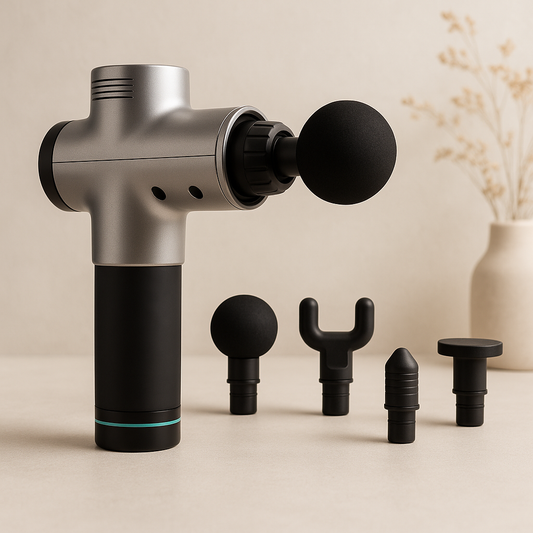
Recovery is no longer treated as an optional extra. People are choosing tools that help them manage tight calves, sore shoulders, and post-training stiffness at home. That does not mean every ache needs a device. It means a short recovery routine can support better movement tomorrow.
Massage balls remain one of the most affordable recovery tools. They are compact, durable, and effective for targeted pressure around the feet, glutes, upper back, and hips. Avoid pressing directly on joints, the neck, or sharp pain points.
Recommended massage ball specifications
- Footprint dimensions: 2.5 x 2.5 x 2.5 inches in use; same size in storage.
- Weight capacity: 250 pounds for controlled bodyweight pressure.
- Resistance type / motor horsepower: Firm silicone compression; no motor.
- Noise level assessment: Very low. Suitable for any apartment floor.
Recommended neck and shoulder massager specifications
- Footprint dimensions: 22 x 16 x 7 inches in use; 14 x 10 x 6 inches stored.
- Weight capacity: Not load-bearing; designed for seated use only.
- Resistance type / motor horsepower: Eight rotating massage nodes with a 24-watt motor.
- Noise level assessment: Low. Typical operating sound stays near 45 to 55 dB.
The Best Fitness Equipment Trends Are Connected
A good setup does not chase every new product category. It connects your training habits. A pull-up bar supports upper-body strength. Bands add rows and presses. A walking pad builds daily activity. A massage ball helps you reset after both.
This approach also protects your budget. Start with equipment that solves a repeated problem. For example, choose bands if you lack strength options. Choose a walking pad if sitting all day is your biggest barrier. Choose recovery tools if soreness prevents your next workout.
Virfit focuses on this kind of useful range: equipment for training intensity, plus tools for mobility and recovery. That balance supports progress that lasts beyond a short motivation burst.
How to Choose Equipment for Your Space
Before buying, use this checklist:
- Measure your training area, storage area, ceiling height, and door frames.
- Check total capacity, not only the product's advertised user weight.
- Match noise levels to your apartment, schedule, and downstairs neighbors.
- Choose progressive resistance over equipment with one fixed challenge.
- Buy for your most common workout, not your occasional ideal workout.
- Leave enough clearance to move safely around each tool.