Home Gym Workout Equipment Organizer Ideas
Share
You feel it the second a workout starts late because you’re hunting for a resistance band, moving dumbbells off the floor, or untangling a jump rope from a foam roller. A home gym workout equipment organizer fixes more than clutter. It makes training easier to start, easier to finish, and a lot easier to repeat tomorrow.
That matters because consistency is usually won or lost in the small moments. If your setup feels clean, fast, and ready, you train more often. If it feels crowded and chaotic, even good equipment gets used less. The right organizer helps you protect your space, your gear, and your momentum.
Why a home gym workout equipment organizer matters
A good home gym does not need a huge footprint. It needs flow. You want to move from warm-up to strength work to cooldown without stepping around loose accessories or stacking gear in random corners.
That is where organization becomes part of performance. Dumbbells stored at a reachable height save time between sets. Resistance bands hung where you can see them get used more often. Recovery tools kept nearby make cooldown work feel like a normal part of training instead of an afterthought.
There is also a safety angle. Loose kettlebells, sliders, ab rollers, and massage tools on the floor turn a small room into a hazard fast. If you train before work, after a long day, or in a shared space, that matters. The cleaner the layout, the easier it is to focus on form and intensity.
Start with the gear you actually use
Before you buy any home gym workout equipment organizer, take a hard look at your equipment. Most people do not need a one-size-fits-all storage system. They need a setup that matches the way they train.
If your workouts are strength-focused, your organizer needs to handle weight, stability, and quick access. That usually means shelving for dumbbells, a stand for kettlebells, and durable floor storage for heavier items.
If you train with more compact gear like bands, handles, ab rollers, push-up bars, yoga blocks, sliders, and recovery tools, vertical storage usually works better. Wall hooks, bins, baskets, and slim racks keep smaller items visible without taking over the room.
If your routine mixes strength, mobility, and recovery, a hybrid setup is usually the smartest move. Heavier gear belongs low and stable. Frequently used accessories belong at eye level or arm level. Soft goods like mats, straps, and towels can go higher or inside closed bins.
The goal is simple: store by use, not just by size. If your warm-up band is buried behind a stack of extra gear, it may as well not be there.
The best organizer setups for small spaces
Most home gyms are really spare bedrooms, garage corners, apartment living areas, or part of a basement. That means every square foot has to work harder.
Wall-mounted storage is often the biggest win. It pulls bands, jump ropes, lifting belts, and mats off the floor without eating into your training area. For small rooms, that alone can make the space feel twice as functional.
Rolling carts are useful if your workout area changes throughout the week. They are especially practical for people who train in a living room or multifunction space and need to move equipment out of sight after a session. The trade-off is stability. Carts are better for lighter accessories than heavy weights.
Tiered racks are a strong option when you use dumbbells, kettlebells, or medicine balls regularly. They keep load-bearing equipment secure and easy to grab. Just make sure the rack fits your actual weight range. Buying a compact rack for a growing setup can lead to another storage problem a few months later.
Storage benches work well if you want a cleaner look and hidden storage. They can hold bands, gloves, ankle straps, and recovery tools while doubling as a seat or support surface. The downside is access. Closed storage looks better, but open storage is usually faster during a workout.
How to organize by workout zone
One of the easiest ways to make your space feel more effective is to stop thinking only about storage and start thinking about zones.
Your strength zone should keep heavy, high-use equipment close together. Dumbbells, kettlebells, push-up bars, and pull-up accessories should be easy to reach with minimal setup. You do not want to cross the room three times between sets.
Your mobility zone should stay light and flexible. Yoga mats, blocks, bands, massage balls, and stretch straps fit best here. This area can be smaller, but it should feel open enough for floor work.
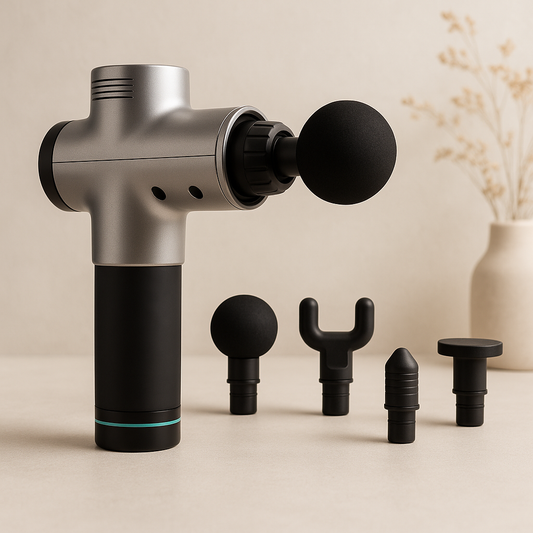
Your recovery zone deserves more attention than most people give it. Foam rollers, massage tools, braces, and neck or shoulder support accessories should be stored where you can grab them quickly after training. If recovery gear is packed away too neatly, it often gets skipped.
Zoning also helps shared households. If more than one person uses the room, each section becomes easier to maintain because everything has a home.
What materials and features to look for
Not every organizer is built for real training equipment. A shelf that works for books may not work for iron weights, dense recovery tools, or daily movement.
Look for sturdy steel frames or reinforced shelving if you plan to store anything heavy. For lighter accessories, durable plastic bins and coated hooks can work well, especially in humid spaces like garages.
Open access matters more than people think. If you have to open lids, move stacks, or pull out a full container just to reach one item, your system is slowing you down. That does not mean everything has to stay visible, but your everyday gear should.
It is also smart to consider floor protection. Rubberized feet, stable bases, and non-slip contact points help keep organizers from shifting, especially on smooth floors. If your gear includes metal weights or compact strength tools, protecting the surface underneath is part of protecting the room.
Common mistakes that create more clutter
The biggest mistake is overbuying storage before understanding the problem. Bigger racks do not automatically create a better home gym. They can actually waste space if most of your equipment is small, portable, or used in different rooms.
Another mistake is storing by category when you really need to store by frequency. Your favorite resistance band should not live in the same hard-to-reach bin as backup accessories you touch once a month.
People also underestimate how quickly cords and straps create visual mess. Jump ropes, band sets, ankle straps, and stretch cords need dedicated hooks or separated compartments. If they all land in one basket, your “organized” setup falls apart fast.
And then there is the floor pile problem. It starts with one kettlebell or one foam roller left out after a session. A week later, the room feels crowded. The best organizer is the one that makes cleanup automatic, not the one that looks impressive in a product photo.
A simple way to build your system
If your space feels overwhelming right now, keep it simple. Start by separating heavy gear, small accessories, and recovery tools. That gives you three clear storage jobs instead of one giant mess.
Next, place your most-used items where you can reach them in seconds. Think resistance bands, ab rollers, mats, or dumbbells you use every week. These are the pieces that should shape your layout.
Then add storage for the secondary items. Extras, backups, and occasional-use tools can go higher, lower, or behind closed storage. Once your core routine is supported, the rest becomes easier to manage.
This is where a practical, durable setup matters most. Virfit’s approach to home fitness is built around gear that performs in real life, and your storage should follow that same standard. Easy to use. Easy to maintain. Built to support progress, not get in the way of it.
Your organizer should make training feel easier
The best home gym workout equipment organizer is not the biggest or the most expensive. It is the one that removes friction from your routine. It helps you start faster, move cleaner, and recover with less effort.
That is a real advantage when time is tight and motivation changes from day to day. A well-organized space keeps the barrier low and the standard high. When your equipment is ready, you are more likely to show up and put in the work.
Make your setup support the way you train now, with just enough room to grow. If your space helps you stay consistent, it is already doing one of the most important jobs in fitness.