Strength and Endurance Training Routine
Share
Trying to build muscle and improve stamina at the same time can turn into a messy program fast. Too much volume drains you. Too much cardio stalls strength. A smart strength and endurance training routine fixes that by balancing heavy work, repeatable conditioning, and recovery you can actually maintain at home or in the gym.
What a strength and endurance training routine should actually do
A good routine has one job. Help you get stronger without losing the engine to repeat hard efforts. That means you are not training like a powerlifter, and you are not training like a distance runner. You are building usable fitness.
For most people, the sweet spot is three strength-focused sessions and two endurance-focused sessions each week. That split gives you enough stimulus to progress while leaving room for recovery. If you are newer to training, start with four total sessions. If your sleep, soreness, or schedule is shaky, fewer good sessions beat more tired ones.
The biggest mistake is stacking intensity every day. Heavy legs on Monday, hard intervals Tuesday, high-volume circuits Wednesday - that looks serious on paper, but it usually wrecks consistency. Better programming spreads stress across the week.
The weekly structure that works
Here is the simplest setup for a balanced strength and endurance training routine:
Day 1: Upper-body strength
Focus on pulling, pushing, and core control. Keep reps lower and rest longer. Think pull-ups, band rows, push-ups, and ab rollouts. The goal is force production, not breathless chaos.
Day 2: Endurance intervals
Use short work periods with controlled rest. A punching trainer, fast band combos, mountain climbers, or step work all fit. Twenty to thirty minutes is enough if intensity is honest.
Day 3: Lower-body strength
Train squats, hinges, split squats, and glute work. Resistance bands work well here, especially for home training. Keep form tight. Lower-body fatigue lingers longer than upper-body fatigue.
Day 4: Recovery or mobility
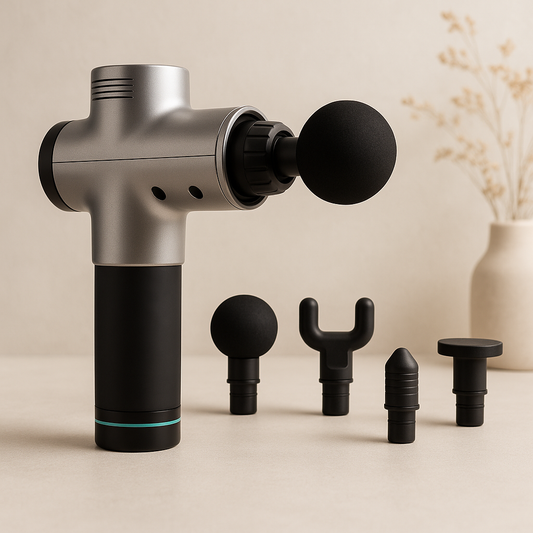
This is where progress gets protected. Light stretching, walking, mobility work, and soft-tissue recovery all count. Skip this often enough, and the rest of the routine gets worse.
Day 5: Full-body endurance strength circuit
This is your bridge day. Moderate resistance. Short rest. Controlled pace. You are teaching your body to produce force repeatedly without falling apart.
Day 6 and 7: One optional light session, one full rest day
If energy is high, add easy zone 2 cardio or mobility. If not, rest. More is not automatically better.
Best equipment for this routine
You do not need a crowded garage gym to train well. A few versatile pieces cover most needs.
Resistance bands set
Bands are one of the best tools for mixed training goals. They handle presses, rows, squats, hinges, carries, and conditioning rounds without taking over your room.
Technical specifications
- Footprint Dimensions: Folded - fits in a small carry bag, roughly 10 x 8 inches. Unfolded - training length typically 4 to 7 feet depending on band style
- Weight Capacity: User load depends on anchor point and movement, but well-built systems commonly support 300 to 500 pounds of force tolerance
- Resistance Type / Motor Horsepower: Elastic resistance, often ranging from 10 to 150 pounds combined
- Noise Level Assessment: Very quiet. Strong choice for apartments and upstairs training
Bands are especially useful if space is tight. They store easily, create little noise, and let beginners scale movements without complicated setup.
Pull-up bar
A pull-up bar gives you high-value upper-body work fast. Pull-ups, dead hangs, knee raises, and scapular control drills all build strength that carries into other movements.
Technical specifications
- Footprint Dimensions: Folded - most doorway models are not foldable, average storage length 36 to 40 inches. Unfolded - mounted span typically 36 to 40 inches wide
- Weight Capacity: Commonly 220 to 300 pounds, depending on build and mounting style
- Resistance Type / Motor Horsepower: Bodyweight resistance
- Noise Level Assessment: Quiet when secured properly. Some doorway bars may shift or creak in older frames
This is a smart pick for anyone who wants upper-body strength without using floor space. Just check doorway fit before buying.
Ab roller
An ab roller looks simple. It is not easy. It trains the core to resist extension under movement, which matters for both strength and endurance.
Technical specifications
- Footprint Dimensions: Folded - many compact models disassemble to roughly 7 x 7 inches. Unfolded - around 10 to 14 inches wide and 6 to 8 inches tall
- Weight Capacity: Commonly 250 to 350 pounds
- Resistance Type / Motor Horsepower: Bodyweight resistance through wheel rollout mechanics
- Noise Level Assessment: Low noise on mats. Moderate on hard floors if the wheel is rigid
Use it near the end of strength workouts or inside controlled circuits. If your lower back arches hard, shorten the range.
Punching trainer
For endurance work, a punching trainer gives you repeatable, high-output conditioning in a small area. It also improves rhythm, coordination, and shoulder stamina.
Technical specifications
- Footprint Dimensions: Folded - depends on model, but compact freestanding units may reduce to roughly 18 x 18 inches at base. Unfolded - around 18 to 24 inches wide with vertical clearance needs of 5 to 6 feet
- Weight Capacity: Not bodyweight-rated, but base stability often supports repeated strikes when weighted appropriately
- Resistance Type / Motor Horsepower: Rebound resistance or spring-loaded target system
- Noise Level Assessment: Moderate. Better on mats. Suitable for apartments if impact is controlled
This works well for people bored by traditional cardio. Short rounds keep focus high and time demands low.
Massage ball
Recovery equipment matters more when you combine strength and endurance. A massage ball helps manage tight calves, glutes, upper back, and feet after repeated sessions.
Technical specifications
- Footprint Dimensions: Folded - not applicable. Standard size often 2.5 to 5 inches diameter. Unfolded - same as stored size
- Weight Capacity: Bodyweight-supported for floor pressure use
- Resistance Type / Motor Horsepower: Manual pressure tool
- Noise Level Assessment: Silent. Ideal for apartments and late-night recovery
Recovery tools do not replace smart programming, but they help you stay ready for the next session.
How to balance intensity without burning out
You need contrast across the week. Heavy strength days should feel different from endurance days. If every session leaves you flat on the floor, you are training fatigue, not performance.
Use this simple rule. On strength days, stop most sets with one or two reps left in reserve. On endurance days, keep output high but technique controlled. If form breaks early, back off. Sloppy speed has a cost.
It also depends on your main goal. If strength matters more, lift first in the week and keep conditioning shorter. If endurance matters more, put intervals earlier and reduce lifting volume slightly. You can improve both at once, but one goal should lead.
Sample session design
Strength day
Start with a main movement like band squats or pull-ups for 4 to 5 sets of 4 to 8 reps. Then add two accessory moves for 3 sets of 8 to 12 reps. Finish with core work using an ab roller or plank variation.
Rest 60 to 120 seconds between harder sets. Longer rest supports better output.
Endurance day
Work in rounds. Try 30 seconds punching, 30 seconds band rows, 30 seconds squats, then 30 seconds rest. Repeat for 6 to 10 rounds.
This format keeps the heart rate up while spreading fatigue across the body. It is effective and easier to recover from than random all-out work.
Recovery is part of the routine
People love training days. Results often come from recovery days. If soreness stays high, motivation drops, and performance follows.
A few basics matter most. Sleep enough. Eat enough protein. Keep one low-stress day each week. Use mobility tools when you feel stiff, not only when pain shows up. Virfit’s approach works well here - train smarter, recover better, and keep the routine realistic enough to repeat next week.
How to choose gear for your routine
Buy for your actual training environment, not your fantasy setup. If you live upstairs, quiet equipment matters. If your space is narrow, vertical storage matters. If you are new, simple gear beats gear with a learning curve.
Use this checklist before you buy:
- Choose equipment that supports at least two training goals
- Check footprint in both storage mode and training mode
- Confirm weight capacity matches your bodyweight and force output
- Favor low-noise options for apartments and shared spaces
- Pick resistance that can scale as you improve
- Add one recovery tool if soreness limits consistency
The best routine is not the hardest one. It is the one you can keep building on, week after week, without needing perfect conditions.