What Is the Most Effective Home Gym Equipment?
Share
If you're asking what is the most effective home gym equipment, the honest answer is this: it depends on your goal, space, and consistency. The best equipment is the gear you will use weekly, not the biggest machine with the most features. For most people, effective means versatile, space-smart, quiet enough for home use, and strong enough to grow with you.
What is the most effective home gym equipment for most people?
For most homes, resistance bands and adjustable dumbbells deliver the best return. They work for beginners, intermediate lifters, and anyone training in a spare bedroom or apartment. Add a pull-up bar if your doorway allows it, and you suddenly have a setup that can train your full body.
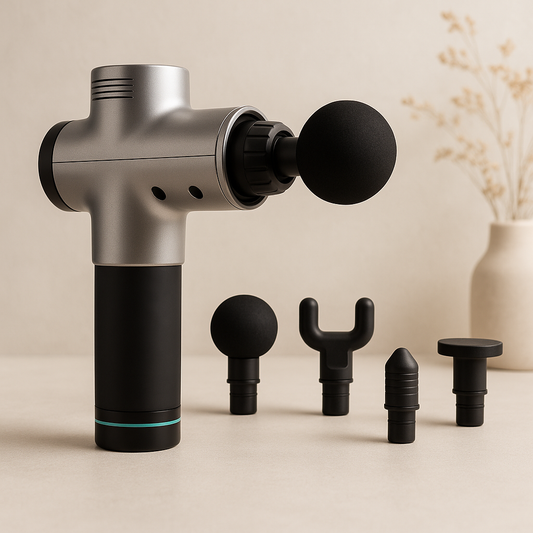
That said, effective does not always mean universal. If fat loss and conditioning matter most, a punching trainer may give you better consistency than dumbbells. If your back hurts after long desk days, mobility and recovery tools may improve your training more than another strength product.
Resistance bands: the highest value per inch of space
Resistance bands are hard to beat. They are affordable, beginner-friendly, and useful for strength, mobility, warm-ups, and rehab-style work. They also solve a major home training problem: they store almost anywhere.
Bands are especially effective if you need low-noise workouts upstairs. No dropped weights. No machine vibration. Just controlled resistance.
Technical specifications
- Footprint Dimensions: Unfolded use area typically 6 ft x 4 ft; folded storage roughly 10 in x 8 in x 3 in in a carry bag
- Weight Capacity: User-dependent; anchor systems commonly rated 300-600 lbs depending on mounting point
- Resistance Type / Motor Horsepower: Elastic resistance, often 10-150 lbs combined depending on set
- Noise Level Assessment: Very quiet; ideal for apartments, shared walls, and early-morning sessions
The trade-off is progression. Bands can build strength, but loading is less precise than dumbbells. Tension also changes through the range of motion. That is useful in some lifts and less ideal in others.
Adjustable dumbbells: best for straightforward strength gains
If your goal is muscle and strength, adjustable dumbbells are one of the smartest buys. They support presses, rows, squats, lunges, carries, and more. They also make progression simple. Increase the load and keep moving.
They take more space than bands, but far less than a full rack. For many people, they are the center of a practical home gym.
Technical specifications
- Footprint Dimensions: Unfolded use area typically 6 ft x 6 ft; storage tray footprint around 16-20 in x 7-9 in per dumbbell pair
- Weight Capacity: Common sets range from 25-55 lbs per dumbbell; premium sets can exceed 70 lbs each
- Resistance Type / Motor Horsepower: Plate-loaded or selectorized weight resistance; no motor
- Noise Level Assessment: Low to moderate; quiet when controlled, louder if set down hard on wood floors upstairs
The main trade-off is cost. Good adjustable dumbbells are not cheap. They also need careful handling if you live above someone else. A mat helps a lot.
Pull-up bars: compact and brutally effective
A pull-up bar is one of the most effective tools for upper-body strength. It trains your back, arms, grip, and core. Add hanging knee raises and isometric holds, and it becomes even more valuable.
For advanced users, a pull-up bar offers long-term challenge. For beginners, bands can assist the movement until strength catches up.
Technical specifications
- Footprint Dimensions: Doorway-mounted bars typically span 24-36 in wide; storage footprint around 38 in x 12 in x 3 in when removed
- Weight Capacity: Commonly 220-300 lbs depending on model and door frame compatibility
- Resistance Type / Motor Horsepower: Bodyweight resistance; no motor
- Noise Level Assessment: Quiet during controlled reps; some doorway bars may creak in older frames or thinner walls
The catch is setup. Not every doorway works. Low ceilings can also limit movement. Still, if your home allows it, few tools match its training density.
Ab rollers: small tool, serious core demand
The ab roller looks simple because it is. That is part of the appeal. It creates high tension through the core, shoulders, and lats with very little equipment. It is one of the best examples of effective not meaning expensive.
It is not the best first purchase for everyone, though. If your core is weak or your lower back is sensitive, form matters a lot.
Technical specifications
- Footprint Dimensions: Unfolded use area around 6 ft x 2 ft; stored size roughly 12-16 in x 7-10 in x 7-10 in
- Weight Capacity: Commonly 220-330 lbs depending on wheel and handle construction
- Resistance Type / Motor Horsepower: Bodyweight rolling resistance; no motor
- Noise Level Assessment: Very quiet on mats; mild rolling sound on hard floors, still apartment-friendly
An ab roller works best as part of a bigger setup, not as your only piece of equipment. Think of it as a high-value specialist tool.
Foldable benches: not flashy, but very useful
A foldable bench changes what your other equipment can do. Dumbbell presses, step-ups, split squats, seated curls, supported rows. One bench opens a lot of training options.
If your space is tight, foldability matters. A bench that disappears after a workout is much easier to live with than one that permanently sits in the room.
Technical specifications
- Footprint Dimensions: Unfolded typically 45-55 in x 16-20 in; folded often 30-35 in x 16-20 in x 8-10 in
- Weight Capacity: Commonly 500-800 lbs total load, including user and weights
- Resistance Type / Motor Horsepower: No resistance system; support equipment only
- Noise Level Assessment: Silent during normal use; minimal noise unless dragged across hard floors
The downside is obvious. A bench does not do much alone. It becomes effective when paired with dumbbells or bands.
Punching trainers: underrated for home cardio
Not everyone wants to jog. Not everyone has room for a treadmill. A punching trainer can be a smarter option if you want conditioning, coordination, and stress relief in one tool. It keeps workouts engaging, which matters if consistency is the real goal.
This is also a strong choice for people who get bored with repetitive cardio. Skill-based conditioning tends to feel shorter than it is.
Technical specifications
- Footprint Dimensions: Base footprint often 20-24 in diameter; total use area around 6 ft x 6 ft
- Weight Capacity: Base fill capacity commonly 100-150 lbs with water or sand for stability
- Resistance Type / Motor Horsepower: Spring-loaded rebound or freestanding striking resistance; no motor
- Noise Level Assessment: Moderate; quieter than many cardio machines, but impact noise can transfer through floors without a mat
The trade-off is specificity. Great for cardio and coordination. Less useful for progressive strength training.
What is the most effective home gym equipment for small spaces?
If you train in a small apartment, the answer changes slightly. Resistance bands are still first. An ab roller and pull-up bar are close behind if your layout supports them. Adjustable dumbbells work well too, but storage and floor protection become more important.
For upstairs living, noise matters as much as results. Heavy foot strikes, dropped weights, and machine vibration create friction fast. Quiet equipment keeps your routine realistic.
The most apartment-friendly setup usually includes bands, a mat, an ab roller, and one compact strength tool like a pull-up bar or adjustable dumbbells. That combination covers strength, core work, mobility, and warm-ups without turning your home into a commercial gym.
The real answer: effective means repeatable
The most effective home gym equipment is the equipment that matches your training style. If you enjoy strength work, start with dumbbells and a bench. If you need low-cost versatility, start with bands. If you want compact upper-body training, get a pull-up bar. If motivation is your biggest issue, choose equipment that feels engaging enough to keep you showing up.
That is where a practical, performance-first setup wins. Virfit's style of equipment fits this approach well because it focuses on real-world training, not oversized promises.
How to choose the right equipment
Use this checklist before you buy anything:
- Pick your main goal first: strength, fat loss, mobility, recovery, or all-around fitness
- Measure your training area and storage area separately
- Check ceiling height and doorway compatibility before buying bars or tall equipment
- If you live upstairs, prioritize low-noise tools and use floor mats
- Choose versatile gear before specialized gear
- Make sure resistance can progress as you get stronger
- Factor in setup time - easy-to-grab equipment gets used more often
- Balance training with recovery tools if soreness limits consistency
Start simple. Train smarter. Add pieces only when your routine proves you need them. The best home gym is not the biggest one. It is the one that keeps you moving next week, next month, and long after motivation fades.