Workout Recovery Equipment at Home That Works
Share
Hard training should build momentum, not leave you too sore to train again. The right workout recovery equipment at home helps reduce tightness, restore comfortable movement, and protect your routine. You do not need a recovery room. You need a few tools that fit your body, space, and training load.
Start With the Recovery Problem
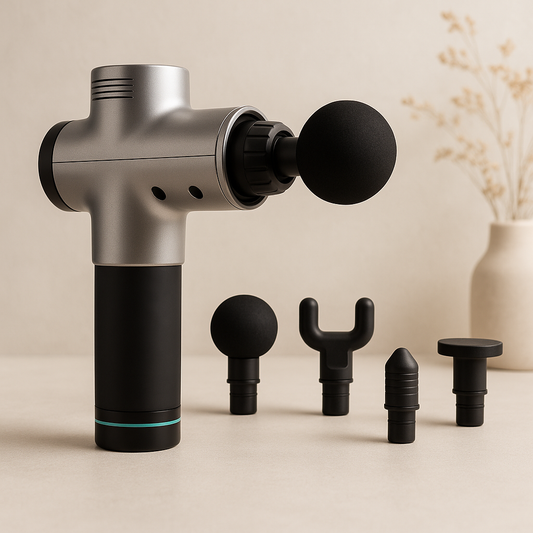
Recovery tools work best when they solve a specific problem. A massage ball reaches a stubborn knot. A foam roller covers larger muscle groups. A percussion massager provides hands-free relief after demanding sessions. A knee brace adds support when an old ache needs attention.
None of these tools replaces medical care. Sharp pain, swelling, numbness, instability, or pain that worsens need professional assessment. For ordinary post-workout tightness, though, a focused home setup can make consistency much easier.
Choose tools based on where you feel limited. Runners may prioritize calves, feet, and knees. Strength athletes often need glute, quad, back, and shoulder work. Desk-bound lifters may benefit most from neck and upper-back relief.
Workout Recovery Equipment at Home: The Core Setup
Massage Ball for Precise Pressure
A massage ball is small, quiet, and unusually useful. Place it between your body and a wall. Use it on the upper back, glutes, feet, and hips. Wall pressure is easier to control than floor pressure, especially for beginners.
Use slow passes for 30 to 60 seconds. Breathe normally. Avoid pressing directly on joints, the spine, or the front of the neck.
Recommended physical specifications
- Footprint dimensions: 2.5 to 3 inches in diameter; no folded or unfolded difference
- Weight capacity: Supports normal bodyweight when used against a wall or floor; user load depends on the ball material
- Resistance type / motor horsepower: Firm rubber, cork, or textured silicone; no motor
- Noise level assessment: Very quiet; apartment-friendly, including upstairs use
Foam Roller for Large Muscle Groups
A foam roller covers more ground than a massage ball. It is useful for quads, hamstrings, calves, glutes, lats, and the upper back. It also supports mobility drills before lifting or running.
A 12-inch roller is easier to store. A 36-inch roller gives more support for upper-back work. Smooth rollers feel more comfortable. Textured rollers can feel more intense, but they are not automatically more effective.
Recommended physical specifications
- Footprint dimensions: 12 x 6 inches for compact storage; 36 x 6 inches for full-length use; no foldable design
- Weight capacity: At least 250 pounds for reliable floor-based use
- Resistance type / motor horsepower: High-density EVA foam over a rigid core; no motor
- Noise level assessment: Low noise; quiet on a yoga mat or carpet, louder on hardwood floors
Neck and Shoulder Massager for Desk-Related Tightness
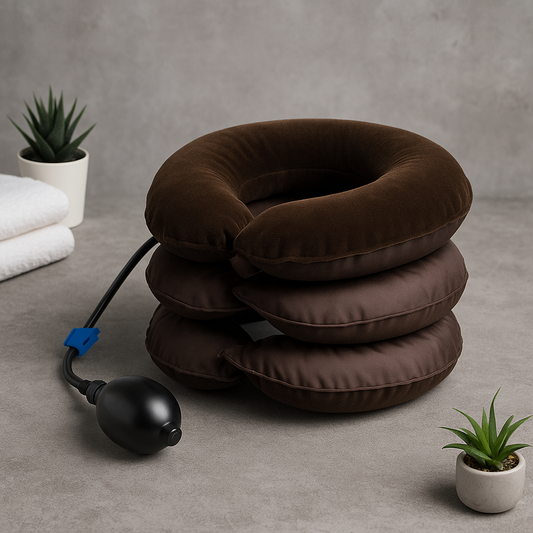
Neck and shoulder tightness can affect pressing, pulling, posture, and sleep. An electric neck and shoulder massager can provide consistent kneading pressure when your hands are tired.
Use it after work, after upper-body training, or during a short evening reset. Keep sessions brief at first. More intensity is not always more recovery.
Recommended physical specifications
- Footprint dimensions: Approximately 20 x 7 x 6 inches when laid flat; no folded or unfolded configuration
- Weight capacity: Not weight-bearing; do not sit or stand on the device
- Resistance type / motor horsepower: Rotating kneading nodes with optional heat; motor horsepower is not typically rated
- Noise level assessment: Low mechanical hum; suitable for apartments, but avoid late-night use near thin shared walls
Knee Brace for Training Support
A knee brace is not a substitute for strength, technique, or medical guidance. It can still be useful during light activity when you want warmth, compression, and a more supported feel.
Fit matters more than aggressive tightness. A brace that slides down is distracting. A brace that causes tingling is too tight. Measure your leg where the manufacturer instructs before ordering.
Recommended physical specifications
- Footprint dimensions: Approximately 11 to 13 inches long; 4 to 6 inches wide when laid flat; folds flat for storage
- Weight capacity: Not applicable; designed for compression and joint support, not load-bearing
- Resistance type / motor horsepower: Elastic compression fabric with optional side stabilizers; no motor
- Noise level assessment: Silent; ideal for apartment workouts and daily wear
Resistance Bands for Mobility and Active Recovery
Recovery is not always passive. Gentle band work can restore control after long periods of sitting or hard sessions. Use bands for shoulder external rotations, glute activation, ankle work, and easy mobility drills.
Bands take almost no room. They are also quiet enough for early mornings. For many home athletes, they deliver the highest value per square foot.
Recommended physical specifications
- Footprint dimensions: 12-inch mini loop or 41-inch long loop; folds into a pocket-sized bundle
- Weight capacity: Not rated as bodyweight support; use only within the listed resistance range
- Resistance type / motor horsepower: Latex or fabric elastic resistance; light, medium, and heavy tension options; no motor
- Noise level assessment: Silent during controlled use; avoid snapping bands against doors or furniture
Build a Routine You Will Repeat
Your recovery setup only works when you use it. Keep the tools visible. Store a massage ball beside your desk. Keep bands near your workout area. Put the foam roller where you cool down after training.
A practical 10-minute routine can include two minutes of easy walking, two minutes of band mobility, three minutes of foam rolling, and three minutes on a massage ball. Adjust the order based on what feels restricted.
After lower-body training, focus on calves, quads, glutes, and hips. After upper-body sessions, use gentle upper-back rolling, shoulder band work, and neck relief. After a long workday, prioritize comfortable movement over intense pressure.
Sleep, hydration, protein intake, and manageable training volume remain the foundation. Recovery equipment supports those basics. It does not override them.
How to Choose Home Recovery Equipment
Before buying, use this checklist:
- Choose the body area you need to address most often.
- Measure your storage space before choosing roller length.
- Prioritize silent tools for apartments and upstairs rooms.
- Match pressure intensity to your tolerance, not your ambition.
- Check bodyweight ratings for rollers and other floor-based tools.
- Skip powered devices if noise or outlet access is a concern.
- Choose tools you can use in five minutes on busy days.