How to Improve Grip Strength With Home Workouts
Share
A weak grip can limit rows, pull-ups, carries, and everyday tasks. The fix is not endless squeezing. To learn how to improve grip strength, train several grip positions, progress gradually, and give your hands time to recover.
Grip strength is more than crushing force. Your hands must hold, pinch, support, and control load. Train those jobs consistently, and heavier lifts feel more secure.
Why Grip Strength Changes Your Training
Your grip is often the first link to fail. You may have strong legs and back, yet lose a deadlift because your fingers open first. You may have the pulling strength for another row, but your forearms give out.
A stronger grip improves force transfer. It helps you hold dumbbells, control resistance bands, hang from a bar, and carry awkward objects without rushing. It also supports daily movement. Opening jars, lifting groceries, and moving furniture all demand hand and forearm strength.
The goal is not a permanently tight hand. Excess tension can aggravate elbows and wrists. The goal is usable strength through a comfortable range of motion.
The Four Types of Grip to Train
A complete plan uses different grips. Each one has a practical role.
Crush grip is the force of closing your fingers around an object. It matters for hand grippers, dumbbells, and heavy handles.
Support grip is holding a load for time. Think farmer carries, dead hangs, and loaded rows. This is often the most useful grip for home strength training.
Pinch grip is holding an object between your thumb and fingers. It builds thumb strength and improves control when lifting plates, books, or wider items.
Open-hand grip uses the fingers without fully closing the hand. Hanging from a pull-up bar is the clearest example. It challenges your fingers, wrists, and forearms differently than a gripper.
You do not need to hammer all four styles every day. Two or three styles per session is enough.
How to Improve Grip Strength With a Simple Weekly Plan
Train grip two or three days weekly. Add it after upper-body strength work or as a short standalone session. Start with two sessions if your hands are new to direct work.
On day one, focus on support strength. Perform dead hangs, carries, or timed holds. On day two, use crush and pinch work. If you add a third day, keep it light and use finger extensions and mobility.
A useful starting point looks like this:
- Support holds or dead hangs: 3 sets of 15 to 30 seconds
- Hand gripper closes: 2 to 3 sets of 8 to 12 controlled reps
- Pinch holds: 2 to 3 sets of 15 to 20 seconds per hand
- Finger extensions: 2 sets of 15 to 20 reps
Progress one variable at a time. Add five seconds to a hold. Add one or two reps. Move to a slightly stronger gripper. Do not increase everything during the same week.
Home Equipment That Earns Its Space
You can build a capable grip routine without a crowded home gym. Choose compact tools with a clear progression path. The specifications below are exact buying targets, not universal measurements. Confirm the listed dimensions and ratings before purchasing any model.
Adjustable Hand Gripper
A hand gripper targets crush strength with very little setup. It works well at a desk, during a short break, or after a workout. Keep your wrist neutral. Close with control, pause briefly, and release slowly.
Look for these exact specifications:
- Footprint dimensions: 6.1 x 4.3 x 1.2 inches unfolded; 6.1 x 2.4 x 1.2 inches when handles are closed
- Weight capacity: Not applicable for a handheld tool
- Resistance type / motor horsepower: Adjustable steel-spring resistance, 22 to 132 pounds
- Noise level assessment: Very quiet; a soft spring click is apartment-friendly
Loop Resistance Band
A loop band can train finger extensions, wrist stability, and high-repetition forearm work. It also adds challenge to pulling exercises when space is limited. For grip balance, place the band around your fingertips and open your hand against resistance.
Look for these exact specifications:
- Footprint dimensions: 12 x 2 inches laid flat; 3 x 2 x 0.5 inches when folded
- Weight capacity: 150-pound maximum working load
- Resistance type / motor horsepower: Layered latex elastic resistance, 15 to 35 pounds
- Noise level assessment: Silent in normal use; keep it clear of door frames and sharp edges
Doorway Pull-Up Bar
A pull-up bar develops open-hand and support grip. Dead hangs are simple, scalable, and demanding. If a full hang is too difficult, keep one or both feet on the floor or a stable chair.
Look for these exact specifications:
- Footprint dimensions: Adjustable width of 28.7 to 36.2 inches; 3.9-inch wall projection when installed
- Weight capacity: 300 pounds maximum user weight
- Resistance type / motor horsepower: Bodyweight resistance; no motor
- Noise level assessment: Low noise; use slowly to avoid door-frame creaks and impact sounds
Three Exercises That Build Real Carryover
Dead Hangs
Hold the bar with both hands. Start with your shoulders lightly engaged rather than fully relaxed. Keep your ribs down and avoid swinging. Accumulate 45 to 90 total seconds across several sets.
Use a towel over the bar only after standard hangs feel easy. A thicker grip raises the demand quickly. It can also increase elbow stress, so build duration first.
Suitcase Holds
Hold one dumbbell, kettlebell, or loaded bag at your side. Stand tall. Do not lean away from the load. Hold for 20 to 40 seconds, then switch sides.
This trains grip while challenging your core and shoulder stability. It is ideal for small spaces because you can stand still. If you live upstairs, static holds are also quieter than walking carries.
Pinch Holds
Hold a flat, stable object between your thumb and fingers. A weight plate works well, but a thick book can work for beginners. Keep the wrist straight and hold for 10 to 20 seconds.
Start conservatively. Thumb tendons fatigue fast. Pinch work should feel challenging, not sharp or unstable.
Balance Strength With Recovery
Your forearms do a lot outside training. Typing, tools, climbing, racquet sports, and lifting kids all count as hand volume. That is why more grip work is not always better.
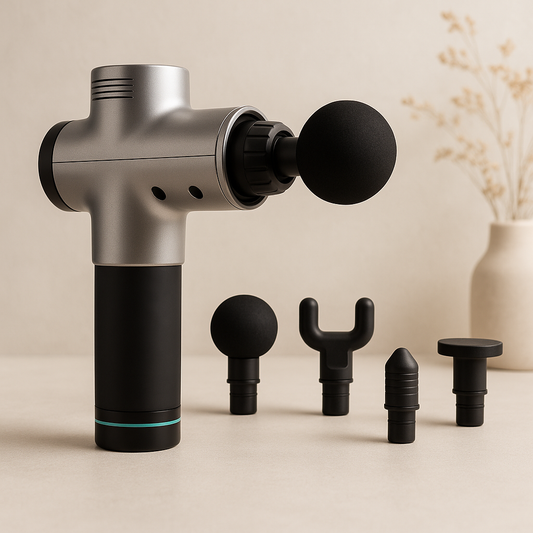
Add finger extensions after squeezing exercises. Open and close your hands slowly. Rotate your wrists in both directions. Light forearm massage can help you notice tight areas, but it does not replace rest or smarter loading.
Reduce volume if you feel persistent pain at the wrist, thumb base, or inner elbow. Numbness, tingling, or loss of coordination needs medical evaluation. Do not train through those symptoms.
How to Choose Grip Equipment for Your Home
Before buying, use this checklist:
- Choose one tool for crush strength and one for hanging or support work.
- Check the exact dimensions against your storage space and doorway.
- Verify the stated load rating exceeds your body weight or training load.
- Pick quiet tools if you train early, late, or upstairs.
- Prioritize adjustable resistance over a tool you will outgrow quickly.
- Make sure the tool supports a pain-free wrist position.