Las 10 mejores opciones de equipos compactos para gimnasio en casa
Compartir
Un espacio pequeño lo cambia todo. El mejor equipo compacto para gimnasios en casa debe justificar su tamaño, ser lo suficientemente silencioso para la vida real y apoyar más de un objetivo. Si vives en un apartamento, entrenas en un rincón libre o compartes paredes con vecinos, la configuración adecuada no se trata tanto de tener más equipo, sino de elegir herramientas que funcionen bien sin ocupar toda la habitación.
Qué hace que el mejor equipo de gimnasio compacto para el hogar valga la pena comprarlo
El equipo compacto no es automáticamente útil. Algunos productos ahorran espacio pero limitan la progresión. Otros entrenan bien pero generan demasiado ruido para vivir en un piso superior. El punto ideal es un equipo que cubra múltiples patrones de movimiento, se guarde rápidamente y soporte el uso regular.
Para la mayoría de las personas, eso significa construir primero sobre la fuerza, luego agregar una herramienta de acondicionamiento y una herramienta de recuperación. Ese enfoque mantiene los costos bajos y los resultados altos. También se adapta a cómo la gente realmente entrena en casa: en sesiones cortas, entre bloques de trabajo o después de que los niños se duermen.
El mejor equipo de gimnasio compacto para el hogar para la fuerza
1. Set de bandas de resistencia
Si buscas la mayor versatilidad por centímetro, empieza aquí. Las bandas sirven para presses, remos, sentadillas, bisagras, curls, trabajo de tríceps, calentamientos y rehabilitación. También resuelven un problema común en espacios pequeños: opciones de carga limitadas para principiantes e intermedios.
Las bandas son especialmente útiles si necesitas poco ruido. Sin placas de metal. Sin pesas caídas. Solo resistencia controlada.
- Dimensiones de huella: Guardado aproximadamente 8 x 6 x 3 pulgadas; en uso depende de la configuración del anclaje, usualmente 2 x 6 pies de espacio libre
- Capacidad de peso: Varía según el set; los sistemas de calidad a menudo se combinan para 100-150 libras de resistencia
- Tipo de resistencia / Potencia del motor: Tubos de resistencia elásticos o bandas de látex planas
- Evaluación del nivel de ruido: Muy silencioso; ideal para apartamentos y habitaciones en pisos superiores
La desventaja es la carga máxima. Los levantadores avanzados pueden superar los sets básicos de bandas para el trabajo de la parte inferior del cuerpo. Pero como base compacta, son difíciles de superar.
2. Banco ajustable plegable
Un banco plegable desbloquea más valor de casi todo lo demás. Press con mancuernas, remos con apoyo de pecho, sentadillas búlgaras, curls sentados, subidas al banco, trabajo de core inclinado, todo en una sola pieza. A menudo es la diferencia entre un montón de equipo aleatorio y una configuración de entrenamiento real.
Busca un banco que se pliegue rápido y se bloquee de forma segura. La inestabilidad no es un problema menor. Afecta tanto al rendimiento como a la confianza.
- Dimensiones de huella: Desplegado aproximadamente 48 x 18 x 18 pulgadas; plegado aproximadamente 30 x 18 x 10 pulgadas
- Capacidad de peso: Rango común de 500-800 libras de carga total
- Tipo de resistencia / Potencia del motor: Ninguno; equipo de soporte para pesas libres y trabajo con peso corporal
- Evaluación del nivel de ruido: Silencioso si se coloca sobre suelo de goma; posible ruido menor por movimiento
Si tu habitación se dobla como oficina o dormitorio, esta es una de las mejores mejoras que puedes hacer para ahorrar espacio.
3. Mancuernas ajustables
Las mancuernas ajustables son equipo compacto premium porque reemplazan un estante entero. Eso importa cuando cada pie cuadrado cuenta. También facilitan la sobrecarga progresiva más que las bandas solas.
Para espacios pequeños, las mancuernas de selector son más rápidas. Las mancuernas con carga de discos son más baratas pero menos convenientes. Depende de si valoras más la velocidad o el presupuesto.
- Dimensiones de huella: Par guardado en bandeja aproximadamente 16 x 8 x 9 pulgadas cada una; espacio de entrenamiento de aproximadamente 6 x 6 pies
- Capacidad de peso: Los sets comunes varían de 25 a 55 libras por mancuerna; algunos van más alto
- Tipo de resistencia / Potencia del motor: Sistema mecánico de peso libre ajustable
- Evaluación del nivel de ruido: Moderado; silencioso en uso si se controla, ruidoso si se cae
Si vives en un piso superior, combínalas con una alfombra gruesa. Ese cambio puede reducir mucho el ruido de impacto.
4. Barra de dominadas para puerta
Esta es una de las formas más inteligentes de usar el espacio vertical. Una barra de puerta desarrolla la fuerza de tracción sin ocupar espacio en el suelo. Dominadas, chin-ups, elevaciones de rodillas colgando y colgarse pasivamente, todo encaja en una rutina compacta.
La clave es la compatibilidad con el marco de la puerta. Mide primero. También piensa en la sensibilidad de la pared si alquilas.
- Dimensiones de huella: Ancho montado generalmente 36-40 pulgadas; tamaño guardado depende del modelo, a menudo alrededor de 38 x 12 x 3 pulgadas
- Capacidad de peso: Generalmente 220-300 libras
- Tipo de resistencia / Potencia del motor: Resistencia del peso corporal
- Evaluación del nivel de ruido: Silencioso durante repeticiones controladas; algunos crujidos posibles dependiendo del ajuste del marco
Esta no es la mejor opción para todos los hogares. Molduras frágiles, marcos de puertas estrechos o techos muy bajos pueden limitar su utilidad.
5. Entrenador de suspensión
Un entrenador de suspensión te permite realizar remos, presses, sentadillas, zancadas, curls de isquiotibiales, planchas y trabajo de movilidad con casi ninguna carga de almacenamiento. También es apto para principiantes porque el ángulo del cuerpo cambia rápidamente la dificultad.
Para apartamentos pequeños, esta es una de las herramientas más limpias disponibles. Se guarda en poco espacio y no genera casi ningún ruido.
- Dimensiones de huella: Almacenado aproximadamente 8 x 6 x 4 pulgadas; en uso necesita aproximadamente 6 x 6 pies
- Capacidad de peso: Comúnmente 300-700 libras dependiendo del sistema de anclaje
- Tipo de resistencia / Potencia del motor: Resistencia de suspensión con peso corporal
- Evaluación del nivel de ruido: Muy silencioso; excelente para edificios compartidos
La limitación es la carga absoluta. El entrenamiento en suspensión desarrolla bien la fuerza, pero no todo el mundo obtendrá suficiente desafío en las piernas sin añadir tempo o trabajo a una sola pierna.
Equipo compacto para core y acondicionamiento
6. Rodillo abdominal
El rodillo abdominal parece simple porque lo es. Esa es parte de su atractivo. Entrena la fuerza del core anti-extensión, la estabilidad del hombro y el control sin necesidad de mucho espacio.
Además, es brutalmente honesto. Si tu core es débil, lo sabrás rápidamente.
- Dimensiones de huella: Almacenado aproximadamente 12 x 7 x 7 pulgadas; en uso necesita aproximadamente 2 x 6 pies
- Capacidad de peso: A menudo 250-400 libras dependiendo del diseño del eje
- Tipo de resistencia / Potencia del motor: Resistencia de rodadura con peso corporal
- Evaluación del nivel de ruido: Silencioso en colchonetas de ejercicio; ruido moderado de la rueda en suelos duros
Este no es un programa completo para el core por sí solo. Combínalo con planchas, cargas o elevaciones de rodillas colgando para un mejor equilibrio.
7. Entrenador de golpeo compacto
Si las cintas de correr son demasiado ruidosas y la cuerda para saltar no es apta para vecinos, un entrenador de golpeo compacto es un compromiso inteligente para el cardio. Mejora el acondicionamiento, la coordinación y el alivio del estrés en un espacio reducido.
Esto funciona especialmente bien para personas que se aburren con el cardio tradicional. Es más probable que seas constante si la sesión se siente atractiva.
- Dimensiones de huella: La base a menudo mide alrededor de 20 x 20 pulgadas; la altura total suele ser ajustable de 48 a 62 pulgadas
- Capacidad de peso: La capacidad de llenado de la base varía; a menudo 25-60 libras de agua o arena para mayor estabilidad
- Tipo de resistencia / Potencia del motor: Rebote con resorte o resistencia al impacto independiente
- Evaluación del nivel de ruido: Moderado; más silencioso que muchas máquinas de cardio, pero la vibración de la base depende del tipo de suelo
Usa una alfombra protectora si entrenas en un piso superior. El impacto se transmite más de lo que la gente espera.
El mejor equipo compacto para gimnasio en casa para la recuperación y la constancia
8. Set de rodillo de espuma y pelota de masaje
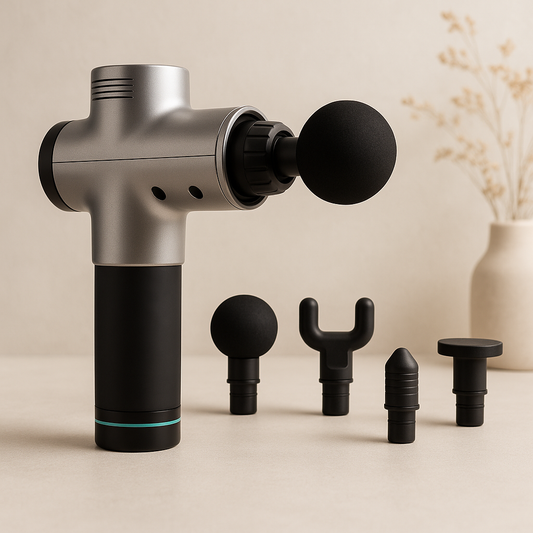
El equipo de recuperación no parece emocionante, pero mantiene el entrenamiento sostenible. Gemelos tensos, parte superior de la espalda rígida, glúteos doloridos y hombros sobrecargados pueden descarrilar la constancia más rápido que un entrenamiento perdido. Las herramientas de recuperación compactas solucionan eso sin ocupar tu armario.
Esta categoría también tiene la mejor relación valor-espacio en la mayoría de las configuraciones del hogar.
- Dimensiones de huella: Rodillo de espuma de aproximadamente 18 x 6 pulgadas o 36 x 6 pulgadas; pelota de masaje de aproximadamente 2.5-5 pulgadas de diámetro
- Capacidad de peso: Depende del peso corporal del usuario; los rodillos de calidad soportan fácilmente cargas adultas estándar
- Tipo de resistencia / Potencia del motor: Herramienta de recuperación manual basada en presión
- Evaluación del nivel de ruido: Silencioso o muy silencioso
Si tu espacio de entrenamiento es limitado, las herramientas de recuperación te ayudan a sacar más provecho de tu equipo principal. Eso las hace prácticas, no opcionales.
Cómo construir una configuración compacta sin malgastar dinero
Comienza con tu objetivo principal. Si quieres fuerza, construye alrededor de bandas de resistencia, mancuernas ajustables y un banco plegable. Si quieres eficiencia con peso corporal, usa una barra de dominadas y un entrenador de suspensión. Si la constancia cardiovascular es lo más importante, añade un entrenador de golpeo compacto en lugar de una máquina grande.
Luego, prueba la configuración según tu situación de vida. Los techos bajos hacen que los presses por encima de la cabeza y los saltos sean menos prácticos. Los apartamentos en pisos superiores castigan las elecciones de equipo ruidoso. Las habitaciones compartidas premian el equipo que se pliega, apila o cabe debajo de una cama.
La combinación de productos de Virfit se adapta bien a este enfoque porque cubre fuerza, movilidad y recuperación sin forzar la construcción de un gimnasio completo.
Cómo elegir el equipo adecuado
Usa esta lista de verificación antes de comprar:
- Mide tu área de entrenamiento y tu área de almacenamiento por separado
- Verifica la altura del techo, el ancho de la puerta y la sensibilidad del suelo
- Prioriza el equipo multiuso antes que el equipo de un solo propósito
- Adapta las opciones de resistencia a tu nivel de fuerza actual
- Elige herramientas silenciosas si hay vecinos o familiares cerca
- Añade herramientas de recuperación pronto, no como una idea de último momento
- Compra para la constancia, no para entrenamientos de fantasía
La mejor configuración es la que realmente usarás de tres a cinco veces por semana. Mantenlo simple. Mantenlo versátil. Entrena de forma más inteligente, recupérate mejor y deja que tu equipo apoye la vida real en lugar de luchar contra ella.