Las 7 mejores herramientas de recuperación compactas para espacios pequeños
Compartir
El dolor de piernas no debería apoderarse de tu sala de estar. Las mejores herramientas compactas de recuperación caben en un cajón, una bolsa de gimnasio o una cesta junto a la cama. Ayudan a reducir la rigidez post-entrenamiento sin añadir equipo voluminoso a tu espacio. Elige herramientas que se adapten a tu volumen de entrenamiento, zonas sensibles y límites de ruido de tu apartamento.
Las Mejores Herramientas de Recuperación Compactas para Uso Diario
La herramienta adecuada depende de lo que se sienta restringido. Un rodillo firme puede ayudar a los músculos densos de las piernas. Una pelota de masaje llega a pequeños puntos gatillo. Una herramienta manual más silenciosa funciona mejor para sesiones nocturnas.
Las dimensiones varían según la marca. Las especificaciones a continuación son objetivos mínimos inteligentes al comparar equipos compactos de recuperación. Siempre verifica la descripción del producto antes de comprar.
1. Rodillo de Espuma de Alta Densidad
Un rodillo de espuma corto es el caballo de batalla de la recuperación compacta. Úsalo en cuádriceps, isquiotibiales, pantorrillas, glúteos y parte superior de la espalda. Crea una presión amplia sobre grupos musculares más grandes. Esto lo hace útil después de sentadillas, carreras, ciclismo o largos días de escritorio.
Elige un rodillo de alta densidad si ya toleras una presión firme. Comienza con una superficie de densidad media si eres nuevo en el automasaje. Las crestas texturizadas agresivas pueden sentirse efectivas, pero más intensidad no siempre es mejor.
- Dimensiones de la huella: 12 x 5.5 pulgadas plegado; 12 x 5.5 pulgadas desplegado
- Capacidad de peso: Al menos 300 libras
- Tipo de resistencia / potencia del motor: Presión del peso corporal; sin motor
- Evaluación del nivel de ruido: Muy silencioso. Espera sonidos ligeros al rodar sobre suelos duros.
2. Pelota de Masaje Tipo Lacrosse
Una pelota de masaje te proporciona una presión dirigida sin ocupar espacio. Funciona especialmente bien para pies, glúteos, músculos del pecho, hombros y la parte superior de la espalda. Colócala contra una pared para menos presión. Usa el suelo solo cuando necesites más intensidad.
Esta es una de las mejores opciones para las personas que se sientan a menudo. Puede abordar las áreas pequeñas y obstinadas que un rodillo completo no alcanza. También es fácil de llevar a la oficina o al gimnasio.
- Dimensiones de la huella: 2.5 x 2.5 pulgadas plegado; 2.5 x 2.5 pulgadas desplegado
- Capacidad de peso: Al menos 300 libras para uso en el suelo
- Tipo de resistencia / potencia del motor: Presión del peso corporal; sin motor
- Evaluación del nivel de ruido: Casi silenciosa. Ideal para paredes compartidas y sesiones nocturnas.
3. Rodillo de Masaje en Forma de Cacahuete
Un rodillo en forma de cacahuete son dos pelotas de masaje unidas. El canal central ayuda a que se asiente al lado de la columna vertebral en lugar de presionarla. Esto lo convierte en una opción sólida para la tensión en la parte superior de la espalda y el trabajo de glúteos.
Es más estable que una pelota suelta. También es menos voluminoso que un rodillo completo. Para muchos atletas caseros, es el punto medio ideal entre el rodillo amplio y la presión puntual.
- Dimensiones de la huella: 5 x 2.5 pulgadas plegado; 5 x 2.5 pulgadas desplegado
- Capacidad de peso: Al menos 300 libras
- Tipo de resistencia / potencia del motor: Presión del peso corporal; sin motor
- Evaluación del nivel de ruido: Muy silencioso. Puede haber un ligero ruido de contacto en suelos de madera.
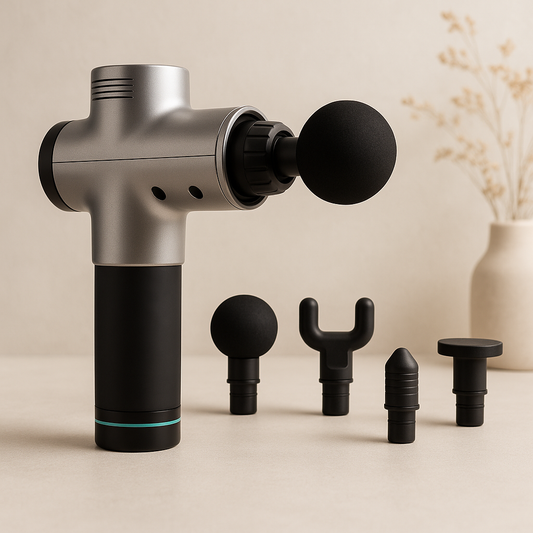
4. Mini Pistola de Masaje
Una mini pistola de masaje incorpora la terapia de percusión en un tamaño fácil de transportar. Puede ser útil después de sesiones de fuerza, carreras largas o días con mucha caminata. Úsala en pantorrillas, cuádriceps, isquiotibiales, glúteos y trapecios superiores.
El inconveniente es la duración de la batería y la fuerza de parada. Las pistolas más pequeñas son más fáciles de guardar. Es posible que no proporcionen la presión profunda de los modelos más grandes. Para la mayoría de los atletas recreativos, eso está bien. El uso constante es más importante que la fuerza máxima.
- Dimensiones de la huella: 7.5 x 5.5 x 2.25 pulgadas almacenada; 7.5 x 5.5 x 2.25 pulgadas en uso
- Capacidad de peso: No aplicable; dispositivo de mano
- Tipo de resistencia / potencia del motor: Motor sin escobillas percusivo; busca de 20 a 30 libras de fuerza de parada
- Evaluación del nivel de ruido: Moderado. Busca una clasificación de 40 a 55 dB para un uso apto para apartamentos.
5. Banda Elástica para Estiramientos
Una banda elástica para estiramientos es sencilla, ligera y subestimada. Te ayuda a mejorar el control durante el trabajo de movilidad de isquiotibiales, caderas, pantorrillas, hombros y pecho. A diferencia del estiramiento pasivo, una banda te permite entrar suavemente en el rango sin forzarlo.
Busca una banda tejida con varios bucles. Los bucles ofrecen opciones de colocación de las manos. También ayudan a los principiantes a mantener un estiramiento sin agarrar demasiado fuerte.
- Dimensiones de la huella: 6 x 2.25 pulgadas plegado; 72 x 1.5 pulgadas desplegado
- Capacidad de peso: Al menos 300 libras de resistencia a la tracción
- Tipo de resistencia / potencia del motor: Cincha tejida no elástica; sin motor
- Evaluación del nivel de ruido: Silencioso. Ideal para las primeras horas de la mañana y apartamentos en pisos superiores.
6. Banda de Resistencia para el Trabajo de Movilidad
Una banda de resistencia ligera se gana su lugar en la recuperación porque soporta el movimiento activo. Úsala para rotaciones de hombros, separaciones de banda, activación de cadera, trabajo de tobillo y ejercicios de movilidad controlada. Te ayuda a practicar la fuerza en los límites de tu rango.
Esto es importante después de estar sentado o antes de entrenar. La recuperación pasiva puede sentirse bien. La movilidad activa a menudo te ayuda a moverte mejor cuando comienza la siguiente sesión.
- Dimensiones de la huella: 4 x 2 pulgadas plegado; 41 x 0.5 pulgadas desplegado para una banda de bucle
- Capacidad de peso: Al menos 150 libras de resistencia a la tracción
- Tipo de resistencia / potencia del motor: Resistencia elástica ligera, típicamente de 10 a 20 libras; sin motor
- Evaluación del nivel de ruido: Silencioso. Mantenlo alejado de los bordes de los muebles para evitar ruidos de chasquido.
7. Masajeador de Cuello y Hombros
Un masajeador compacto de cuello y hombros puede ser útil después de días de mucho tiempo frente a la pantalla o entrenamiento de la parte superior del cuerpo. Es más útil para la tensión amplia alrededor de los trapecios y la parte superior de la espalda. Debe sentirse relajante, no doloroso.
Elige un modelo con intensidad ajustable y apagado automático. El calor puede sentirse bien, pero es opcional. Si eres sensible a la presión, comienza sin calor y usa sesiones cortas.
- Dimensiones de la huella: 15 x 7 x 5 pulgadas almacenado; 15 x 7 x 5 pulgadas en uso
- Capacidad de peso: No aplicable; dispositivo portátil
- Tipo de resistencia / potencia del motor: Nodos de amasado giratorios; motor eléctrico de bajo voltaje
- Evaluación del nivel de ruido: Bajo a moderado. Espera un zumbido mecánico suave de alrededor de 45 a 55 dB.
Construye un Pequeño Kit de Recuperación Que Realmente Usarás
Un kit de recuperación solo funciona si permanece visible y fácil de usar. Comienza con dos herramientas. Un rodillo de espuma y una pelota de masaje cubren la mayoría de las necesidades. Añade una banda de estiramientos si la movilidad limita tu sentadilla, el alcance por encima de la cabeza o la zancada al correr.
Elige una mini pistola de masaje si prefieres un alivio guiado y sin mucho esfuerzo. Elige bandas si necesitas movimiento antes de entrenar. Las mejores herramientas de recuperación compactas no son necesariamente las más potentes. Son las que usarás tres veces por semana.
Mantén tu kit cerca de donde entrenas. Una cesta al lado de tu colchoneta de yoga funciona bien. Un cajón pequeño funciona incluso mejor para la vida en un apartamento. Ponlo donde un reinicio de cinco minutos sea más fácil que omitir la recuperación.
Cómo Elegir Herramientas de Recuperación Compactas
Usa esta lista de verificación antes de añadir algo a tu configuración:
- Elige herramientas amplias para piernas, glúteos y parte superior de la espalda.
- Elige pelotas pequeñas para pies, hombros y puntos tensos precisos.
- Prioriza las herramientas manuales para una recuperación silenciosa en el apartamento.
- Verifica las clasificaciones de decibelios antes de comprar un masajeador eléctrico.
- Adapta el nivel de presión a tu tolerancia, no a tu ego.
- Compra materiales duraderos que soporten el uso repetido del peso corporal.
- Elige herramientas que se guarden dentro de tu espacio real.
- Deja de usar cualquier herramienta que cause dolor agudo, entumecimiento o moretones.