Best Strength Training for Endurance Athletes
Share
If your legs feel strong at mile one but flat by mile ten, endurance work alone is not enough. The best strength training for endurance athletes builds force, durability, and better movement without stealing energy from running, riding, or swimming. The goal is simple: get stronger, stay efficient, and recover fast enough to train again tomorrow.
What the best strength training for endurance athletes really looks like
Endurance athletes do not need bodybuilding splits. They need enough strength to improve economy, hold form under fatigue, and reduce overuse issues. That usually means two short sessions per week, built around compound patterns.
The best plan emphasizes squats, hinges, split-stance work, calf strength, pulling, pushing, and core stability. Reps stay mostly low to moderate. Quality matters more than chasing soreness. If a lifting session ruins your next key workout, it was too much.
Heavy strength work can improve running economy and cycling power. But there is a trade-off. More lifting volume creates more fatigue. That is why endurance athletes usually do better with fewer exercises, better execution, and a clear reason for every set.
Start with lower-body strength
Your lower body does most of the work in endurance sports. It also takes the most repetitive stress. Strong hips, quads, hamstrings, and calves help you produce force with less wasted motion.
A good weekly template includes a squat pattern, a hinge, and single-leg work. Goblet squats or band-resisted squats train force production and posture. Romanian deadlifts teach hip loading and hamstring strength. Split squats or reverse lunges build control side to side, which matters because endurance sports are rarely perfectly symmetrical.
Calf work deserves more respect. Runners need it for stiffness and propulsion. Cyclists need it for ankle control through the pedal stroke. High-rep calf raises help, but slower, loaded reps are often better for tendon strength.
Resistance bands set
Bands are one of the most practical tools for endurance athletes training at home. They work well for squats, hinges, lateral walks, rows, presses, and core work. They are also easier on joints when you are already carrying training fatigue.
Technical specifications
- Footprint Dimensions (folded vs. unfolded): Folded 10 x 8 x 2 inches, unfolded use area depends on anchor setup, typically 6-8 feet of clearance
- Weight Capacity: User limited, bands typically provide 10-150 pounds combined resistance depending on set
- Resistance Type / Motor Horsepower: Elastic variable resistance
- Noise Level Assessment (Crucial for apartments/upstairs): Very quiet, apartment-friendly, minimal floor impact
Do not skip upper-body work
Many endurance athletes undertrain the upper body. That becomes obvious late in races, especially when posture starts to collapse. A stronger upper back and trunk help keep mechanics cleaner when fatigue builds.
Swimmers need pulling strength directly. Runners and cyclists need it indirectly through posture, arm drive, and stability. You do not need endless isolation work. Pull-ups, rows, push-ups, and overhead pressing variations are usually enough.
Pull-up bar
A pull-up bar gives you high value without taking over a room. Pull-ups, hangs, knee raises, and scapular control drills all support shoulder health and trunk stiffness.
Technical specifications
- Footprint Dimensions (folded vs. unfolded): Folded 38 x 6 x 3 inches, unfolded installed width typically 36-40 inches across doorway
- Weight Capacity: Commonly 220-300 pounds depending on mounting style
- Resistance Type / Motor Horsepower: Bodyweight resistance
- Noise Level Assessment (Crucial for apartments/upstairs): Quiet if securely mounted, low impact, little vibration transfer
Core training should resist movement, not just create it
For endurance athletes, the core is not about crunch volume. It is about transmitting force and resisting breakdown. When the trunk loses stiffness, stride mechanics get sloppy, pedal force leaks, and shoulder position falls apart.
That is why anti-extension and anti-rotation work often beat traditional sit-ups. Rollouts, dead bugs, planks, and carries train the kind of control that actually carries over.
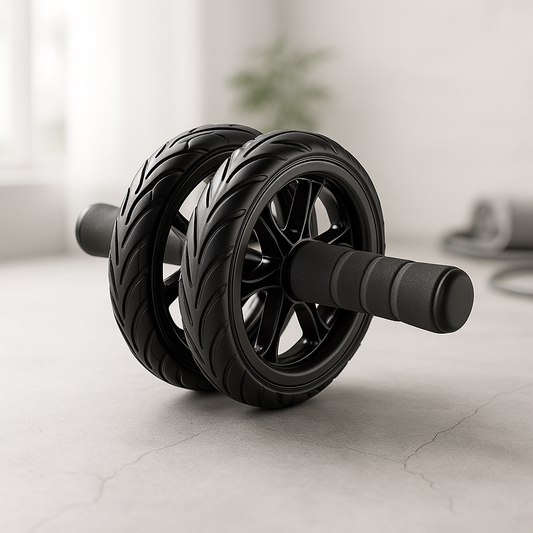
Ab roller
The ab roller is simple, demanding, and useful when used well. It teaches full-body tension and anti-extension strength, which matters when trying to keep form late in long sessions.
Technical specifications
- Footprint Dimensions (folded vs. unfolded): Folded 12 x 7 x 7 inches, unfolded same footprint with about 4-6 feet rollout space needed
- Weight Capacity: Commonly 250-300 pounds
- Resistance Type / Motor Horsepower: Bodyweight resistance through rolling instability
- Noise Level Assessment (Crucial for apartments/upstairs): Quiet on mats, low impact, suitable for upstairs use with floor protection
How to fit strength work into endurance training
Timing matters as much as exercise choice. The cleanest option is two sessions per week on hard training days. That keeps your easy days truly easy. For example, lift after intervals, not before. Or place strength after a moderate ride, then protect the next day for recovery.
Keep sessions around 30 to 45 minutes. Start with 3 to 5 exercises. Use 2 to 4 working sets. Stay one or two reps short of failure on most sets. You want adaptation, not wreckage.
During base phases, you can push strength slightly harder. During race season, cut volume and keep enough intensity to maintain strength. One short weekly session can be enough when endurance work peaks.
Recovery tools matter more than people admit
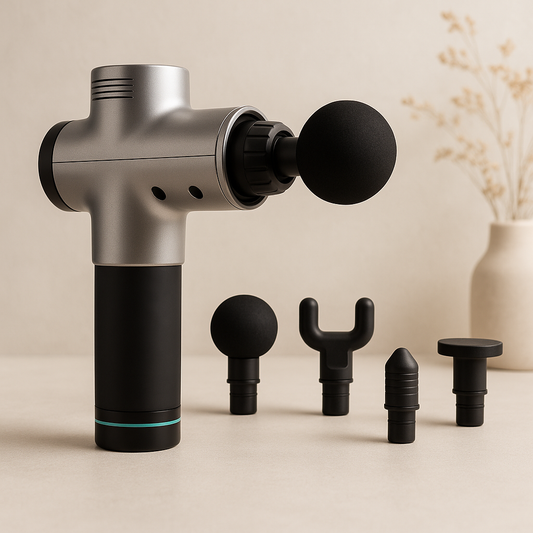
Strength training only helps if you can absorb it. Endurance athletes often live close to their recovery ceiling. Small issues in the knees, calves, hips, or feet can turn into missed sessions fast.
Support and recovery gear will not replace smart programming. But it can help you stay consistent. That is the whole game.
Knee brace
A knee brace can be useful during high-volume blocks or when mild irritation starts to build. It is not a fix for poor mechanics, but it can add support while you address strength and mobility.
Technical specifications
- Footprint Dimensions (folded vs. unfolded): Folded 10 x 5 x 2 inches, unfolded fit depends on size and strap length
- Weight Capacity: Not weight-rated, sized by leg circumference and compression level
- Resistance Type / Motor Horsepower: Compression support, no motor
- Noise Level Assessment (Crucial for apartments/upstairs): Silent in use, fully apartment-friendly
Massage ball
A massage ball is one of the easiest recovery tools to keep nearby. It works well for plantar fascia, calves, glutes, and upper back. Short sessions can improve tissue tolerance and help you feel less beat up between workouts.
Technical specifications
- Footprint Dimensions (folded vs. unfolded): 2.5-5 inches diameter depending on model, no setup space beyond floor area used
- Weight Capacity: User limited, designed for bodyweight pressure
- Resistance Type / Motor Horsepower: Self-myofascial release, no motor
- Noise Level Assessment (Crucial for apartments/upstairs): Very quiet, ideal for apartments and shared spaces
Common mistakes that waste effort
The biggest mistake is lifting like a power athlete while training like an endurance athlete. Too much volume, too many exercises, and too much soreness will interfere with the work that actually drives race performance.
The next mistake is avoiding heavy resistance completely. Light circuits have a place, especially for beginners, but stronger tissues usually need more than endless high reps. If your form is solid, progressive resistance helps.
Another common miss is ignoring single-leg work and calf strength. Those are often the weak links. The final mistake is skipping recovery until something hurts.
How to choose the right setup
If you train in a small space, start with bands, an ab roller, and one recovery tool. That covers strength, core, and maintenance without clutter. If you want more upper-body training, add a pull-up bar.
Use this checklist before you buy:
- Choose gear that fits your training space, not your ideal setup
- Prioritize quiet equipment if you live upstairs or share walls
- Pick tools that support compound movements first
- Make sure weight capacity matches the heaviest user
- Look for options that store fast and set up fast
- Add recovery tools if soreness limits consistency
- Buy for the sessions you will repeat, not the ones that sound impressive
For most people, the best setup is not the biggest one. It is the one you will use every week. Virfit's approach fits that reality well: practical gear, home-friendly design, and tools that support both training and recovery.
Train smarter. Keep it repeatable. The strongest endurance athletes are rarely the ones doing more. They are the ones doing enough, consistently, for a long time.