Ab Roller Before After Results That Last
Share
Most people searching ab roller before after photos want one answer: does this small tool actually change your body? Yes - but not by magic. An ab roller can build stronger abs, improve trunk stability, and sharpen muscle definition over time. The catch is simple. Your results depend on form, training consistency, recovery, and body fat levels.
What ab roller before after really looks like
The biggest mistake is expecting six-pack photos in two weeks. Real ab roller before after progress usually shows up in stages. First, your core feels tighter during planks, push-ups, and daily movement. Then your rollout range improves. After that, visible definition may start to show - if nutrition supports fat loss.
That means the ab roller is not just an ab shaper. It is a strength tool. It trains your abs to resist spinal extension while your shoulders, lats, and glutes help control the movement. Done well, it delivers more than a burn. It builds usable core strength.
For some people, the before and after change is better posture and less trunk weakness. For others, it is a flatter-looking waist, stronger brace during lifting, or more athletic control. Visible abs are possible, but they depend on the whole picture.
Why results vary more than people expect
Two people can use the same roller for eight weeks and get very different outcomes. One gets stronger and leaner. The other feels neck strain and sees little change. Usually, the difference comes down to three factors.
First is exercise quality. Rollouts done with a sagging lower back shift stress away from the abs. Second is training frequency. One hard session per week rarely moves the needle. Third is body composition. Strong abs can stay hidden under a higher body fat level.
This is why ab roller before after stories need context. The roller helps build the muscle. Diet and total activity help reveal it. Recovery helps you keep training long enough to see the payoff.
Top equipment options for better rollout progress
Not every ab roller feels the same. Stability, grip, width, and assist features all affect how confident you feel during training.
Standard Single-Wheel Ab Roller
A standard single-wheel model works well for people who want a compact, low-cost core tool. It demands a little more balance, which can be a plus if you already have basic control.
- Footprint Dimensions: approximately 12 x 7 inches assembled; not foldable on most models
- Weight Capacity: commonly 220-300 pounds
- Resistance Type / Motor Horsepower: bodyweight resistance; no motor
- Noise Level Assessment: low noise on exercise mats, moderate on hard floors due to wheel contact
Dual-Wheel Ab Roller
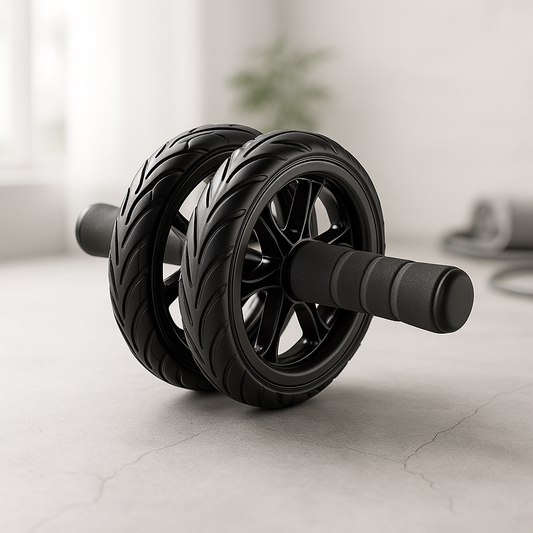
A dual-wheel design gives you a wider base. That usually means better stability. Beginners often feel more comfortable here because the wheel tracks straighter and wobbles less.
- Footprint Dimensions: approximately 12-14 x 8-10 inches assembled; not foldable on most models
- Weight Capacity: commonly 250-330 pounds
- Resistance Type / Motor Horsepower: bodyweight resistance; no motor
- Noise Level Assessment: low noise on mats, low to moderate on hardwood depending on wheel material
Ab Roller With Resistance Assist
Assisted rollers use an internal spring or tension system to help on the return. That does not make them easy. It makes them more repeatable for newer users who cannot yet control the full range.
- Footprint Dimensions: approximately 15-17 x 8-10 inches assembled; not usually foldable
- Weight Capacity: commonly 250-300 pounds
- Resistance Type / Motor Horsepower: bodyweight plus spring-assisted resistance; no motor
- Noise Level Assessment: low rolling noise, slight internal mechanism sound during return phase
Ab Roller With Knee Pad Bundle
This setup is less about performance specs and more about training consistency. If your knees hurt on tile or concrete, comfort matters. The best gear is the gear you keep using.
- Footprint Dimensions: roller approximately 12-14 x 7-10 inches assembled; knee pad around 13-16 x 6-8 inches
- Weight Capacity: commonly 220-300 pounds
- Resistance Type / Motor Horsepower: bodyweight resistance; no motor
- Noise Level Assessment: low on mats and pads, apartment-friendly for most users
How long before you notice a difference?
Most users notice strength changes in two to four weeks. Visible ab roller before after changes often take six to twelve weeks, sometimes longer. The timeline depends on your starting point.
If you are new to training, progress can come fast. Better coordination, longer rollout distance, and stronger bracing often show up early. If you already train regularly, the change may be subtler. You might notice improved core endurance, better pull-up control, or stronger lifting mechanics before visible changes.
A useful benchmark is not just mirror progress. Track how far you can roll out with a flat back. Track rep quality. Track whether you can control the return without collapsing. Those signs matter.
How to train for real before-and-after results
You do not need daily rollouts. You need smart dosage. For most people, two to four sessions per week is enough. Keep the reps clean. Stop before your hips sag or your ribs flare.
Start with short-range kneeling rollouts. Think about tucking the pelvis slightly and keeping the abs braced. Reach forward only as far as you can control. Then pull back using the core, lats, and hips together.
A practical progression looks like this:
- Week 1-2: 3 sets of 5-8 short-range kneeling rollouts
- Week 3-4: 3 sets of 6-10 deeper kneeling rollouts
- Week 5-8: 4 sets of 8-12 controlled reps, plus a pause at full reach
- After that: slower tempo, longer range, or advanced standing variations
Pair the roller with planks, dead bugs, hollow holds, and basic strength work. That combination usually beats endless ab-only sessions.
Common mistakes that ruin ab roller progress
The biggest one is turning the rollout into a lower-back stretch. If your hips drop and your ribs flare, the abs stop doing the job you want them to do. That usually means you went too far, too soon.
Another issue is overtraining. The rollout is more demanding than it looks. Sore abs are fine. Joint irritation is not. If your shoulders or lower back feel beat up, reduce range and frequency.
Then there is the visual-results problem. Many people train abs hard but ignore sleep, steps, calories, and protein. The roller can strengthen the wall of the trunk. It cannot outwork a poor routine outside the workout.
Who gets the best results from an ab roller?
Beginners can do very well if they stay patient. Intermediate users often get the best mix of strength and visible improvement because they can train harder while keeping form. Advanced users benefit too, but they usually need tougher progressions to stay challenged.
This tool also works well for small-space training. It stores easily, needs very little floor space, and creates minimal noise compared with machines or jumping workouts. For apartment users, that matters. A mat under the wheel makes it even quieter.
If you have current lower-back pain or poor shoulder control, be careful. The movement is effective, but it is not forgiving when form slips.
How to judge before-and-after claims online
Photos can motivate you, but they can also mislead you. Lighting, posture, pump, flexing, and even meal timing can change how an abdomen looks. Better proof comes from performance markers.
Ask better questions. Did the person improve rollout range? Did they lose body fat? Did they build other habits too? If the answer is yes, the result is more believable. Real change usually comes from a system, not one piece of equipment.
That is the right mindset for any home setup. Train smarter. Recover better. Stay consistent. Tools help, but habits deliver.
How to Choose
Use this buyer's guide checklist before you commit.
- Choose a dual-wheel model if you want extra stability.
- Choose assisted resistance if full rollouts feel too advanced.
- Check wheel grip for hard floors and apartment noise.
- Use a knee pad if you train on tile, wood, or concrete.
- Confirm weight capacity matches your bodyweight with margin.
- Keep the footprint compact if storage space is tight.
- Prioritize handle comfort if you train several times per week.
The best ab roller is not the most advanced one. It is the one that matches your current strength and keeps you training with clean reps. Give it eight honest weeks, pair it with solid nutrition, and let progress earn the photo.