9 Best Strength Endurance Exercises
Share
If your muscles give out before your lungs do, you do not need more random cardio. You need better strength endurance work. The best strength endurance exercises train force under fatigue, so you can push, pull, squat, and carry longer without your form falling apart.
What makes the best strength endurance exercises work?
Strength endurance sits between pure strength and pure cardio. You are not chasing a one-rep max. You are not jogging for an hour either. The goal is to repeat quality muscular effort for longer sets, shorter rests, or more total rounds.
That changes exercise selection. The best choices are movements you can load safely, repeat cleanly, and scale in a small home setup. They should challenge muscles first, while still pushing heart rate enough to build work capacity.
For most people, that means compound patterns. Squat, hinge, push, pull, brace, rotate, and carry. Isolation work has a place, but the biggest return usually comes from moves that train several muscles together.
Best strength endurance exercises for real-world training
1. Resistance band thrusters
This is one of the best strength endurance exercises for busy home workouts. You squat, stand up hard, and press overhead in one smooth rep. Legs, shoulders, core, and lungs all work together.
Bands are especially useful for beginners and apartment training. They are easier on joints than fixed weights and much quieter than dumbbells hitting the floor.
Technical specifications for resistance bands:
- Footprint Dimensions: Folded - about 8 x 4 x 2 inches in a drawer or bag. Unfolded - roughly 4 to 7 feet in usable length depending on band style.
- Weight Capacity: Varies by set. Heavy loop bands commonly handle over 150 pounds of stretch tension.
- Resistance Type / Motor Horsepower: Elastic resistance. No motor.
- Noise Level Assessment: Very quiet. Excellent for apartments and upstairs use.
Use moderate tension for sets of 12 to 20. If your lower back starts taking over, reduce resistance and clean up your squat depth.
2. Pull-up bar hanging knee raises
Core endurance is often ignored until it fails. Hanging knee raises train the abs, hip flexors, grip, and shoulder stability at once. They also build the trunk control you need for longer sets of pushing, running, and carrying.
If full hanging reps are too much, start with bent-knee holds or slow singles. If they are too easy, move to straight-leg raises.
Technical specifications for a pull-up bar:
- Footprint Dimensions: Folded - not applicable for most fixed doorway bars. Unfolded - typically 36 to 40 inches wide and 10 to 20 inches deep depending on design.
- Weight Capacity: Commonly 220 to 300 pounds.
- Resistance Type / Motor Horsepower: Bodyweight resistance. No motor.
- Noise Level Assessment: Low to moderate. Quiet when mounted well, but poor installation can create doorframe vibration.
This move is effective because it taxes smaller stabilizers over time. That is exactly what strength endurance demands.
3. Push-up to shoulder tap
A standard push-up builds pressing stamina. Adding the shoulder tap raises the demand on anti-rotation control. Now the chest, triceps, shoulders, and core have to stay organized while fatigue climbs.
This is a smart pick when space is tight. You only need enough room for a mat. It also keeps impact low, which matters in upstairs apartments.
If shoulder tapping ruins your push-up position, split the drill. Do push-ups first, then hold a plank and tap slowly.
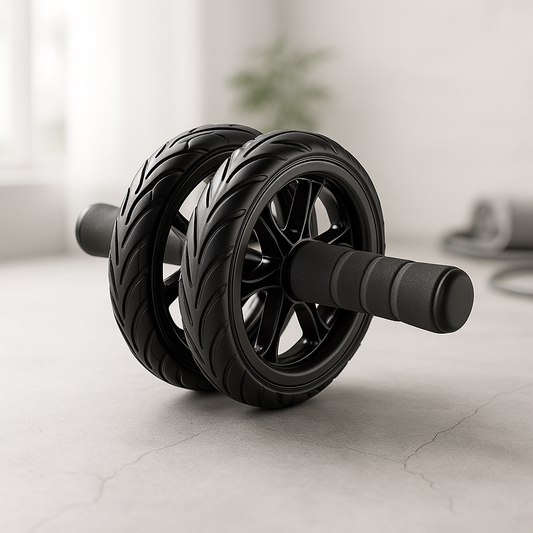
4. Ab roller rollouts
Few tools challenge core endurance like an ab roller. Every rollout trains the abs to resist spinal extension while the shoulders and lats stabilize. That creates long-lasting tension, not just a quick burn.
The trade-off is difficulty. Rollouts are brutally honest. If you lose pelvic control, your lower back will tell you fast. Beginners should start with a short range from the knees.
Technical specifications for an ab roller:
- Footprint Dimensions: Folded - about 7 x 7 x 2 inches if handles detach. Unfolded - roughly 10 to 14 inches wide and 7 inches tall.
- Weight Capacity: Commonly 220 to 300 pounds.
- Resistance Type / Motor Horsepower: Bodyweight resistance through wheel rollout. No motor.
- Noise Level Assessment: Low. Quiet on a mat, slightly louder on hardwood.
For endurance, think controlled reps, not max distance. Sets of 8 to 15 with strict tempo work well.
5. Split squats with resistance bands
Unilateral leg work is gold for strength endurance. Split squats train quads, glutes, and balance without needing a heavy rack setup. Bands add tension without loading the spine heavily.
They are also practical in small rooms. One band and a few feet of floor space are enough. That makes them ideal for people training around furniture, low ceilings, or shared walls.
Technical specifications for resistance bands:
- Footprint Dimensions: Folded - about 8 x 4 x 2 inches. Unfolded - 4 to 7 feet long depending on style.
- Weight Capacity: Heavy-duty sets often exceed 150 pounds of combined tension.
- Resistance Type / Motor Horsepower: Elastic resistance. No motor.
- Noise Level Assessment: Very quiet. Good for early-morning sessions.
Long sets here are humbling. Aim for 12 to 18 reps per side before increasing band tension.
6. Suspension trainer rows
Rows belong on any list of best strength endurance exercises because posture breaks down under fatigue. Suspension rows build upper-back endurance, grip, and scapular control while letting you change difficulty just by changing body angle.
That matters for mixed households. Beginners can stand more upright. Advanced users can go nearly horizontal and keep reps high.
Technical specifications for a suspension trainer:
- Footprint Dimensions: Folded - about 8 x 6 x 3 inches in a carry bag. Unfolded - straps usually extend 6 to 8 feet from anchor.
- Weight Capacity: Often 300 to 400 pounds.
- Resistance Type / Motor Horsepower: Bodyweight angle-based resistance. No motor.
- Noise Level Assessment: Low. Usually quiet, though door anchors may create light contact noise.
Rows also pair well with push-ups for simple endurance supersets.
7. Punching trainer intervals
Not every strength endurance exercise has to look like traditional lifting. A punching trainer can build shoulder stamina, rotational control, and repeat-effort conditioning fast. It is especially useful if you get bored with standard circuits.
The key is crisp volume, not sloppy flailing. Throw short combinations, reset your stance, and keep the trunk engaged. Your shoulders will feel it before the round ends.
Technical specifications for a punching trainer:
- Footprint Dimensions: Folded - depends on model, often not foldable. Unfolded - typically 18 to 24 inches wide with a compact standing or mounted setup.
- Weight Capacity: User capacity is generally not rated like a bodyweight station. Mounted hardware should support repeated impact loads.
- Resistance Type / Motor Horsepower: Rebound resistance or spring-based target response. No motor.
- Noise Level Assessment: Moderate. Quieter than heavy bag work, but repeated strikes still create some noise.
If neighbors are a concern, keep rounds shorter and focus on speed and precision over maximum power.
8. Mountain climbers with sliders or towels
This is one of the simplest ways to train full-body endurance without jumping. Sliders increase core demand because your trunk has to resist sway while the legs drive repeatedly.
They are not glamorous, but they work. You get shoulders, abs, hip flexors, and cardiovascular stress in one efficient movement.
Use this when noise matters. It is much quieter than burpees and easier on the knees than endless squat jumps.
9. Loaded carries with bands or household weight
Carries are underrated. They train grip, traps, core stiffness, and gait under load. More importantly, they build the kind of practical endurance you notice in daily life.
If you do not own kettlebells or dumbbells, you can still create the pattern with anchored band suitcase holds and marches. It is not identical, but it develops similar anti-lateral-flexion endurance.
The trade-off is space. True walking carries need a hallway, driveway, or repeated short laps. In tight rooms, marching in place is the better call.
How to program the best strength endurance exercises
Keep it simple. Pick four to six movements. Cover a squat or lunge, push, pull, core, and one conditioning finisher. Work for 30 to 45 seconds, or aim for 12 to 20 reps. Rest 15 to 30 seconds between moves.
Two to four rounds is enough for most people. If form slips early, reduce volume before you add more intensity. Strength endurance responds well to consistency, not ego.
If you train three days a week, rotate movement emphasis. One day can lean lower body. Another can favor upper body and core. The third can be mixed and faster paced. That keeps fatigue manageable while still building capacity.
How to choose the right setup
Use this buyer's guide checklist before you commit:
- Choose quiet equipment if you train upstairs. Bands, sliders, and ab rollers win.
- Check your usable floor space, not room size. Furniture changes everything.
- Match resistance to your level. Too heavy kills endurance work fast.
- Prioritize versatile tools. A pull-up bar or bands cover more training ground.
- Think about setup time. Gear that takes five minutes to install gets skipped.
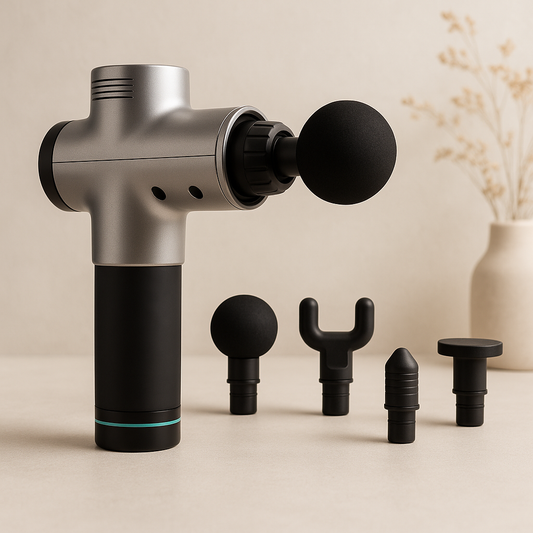
- If recovery is a weak point, pair training tools with mobility support.
Virfit's approach fits this well. Practical gear. Real use. No wasted space.
The best plan is the one you can repeat next week. Pick two or three of these exercises, train them hard, and let consistency do the heavy lifting.